
A woodworking shop doesn’t need to be big or expensive
Discover why a woodworking shop doesn’t need to be big or expensive to be effective. Learn smart organization, essential tools, and efficient workflow tips.
SHOP 1 - INTRO / SPACE /LAYOUT
Sawdust BuzzBlog Editorial Team - Led by AJ “Buzz” Eichman
2/11/20265 min read
The Shop Is Just Another Tool (Not a Trophy)
Let’s get real for a sec—when you picture a woodworking shop, you might see a giant, batcave-esque space filled with machines that cost more than your car. Newsflash: You don’t need a woodworking version of Tony Stark’s lab to build a killer project. Your shop is just one tool in your toolkit, not the star of the show.
Think of it as that quirky sidekick who’s not flashy but gets stuff DONE. Size and price tags matter about as much as my 7-year-old’s opinion on tax deductions (“Do I have to listen to this, Dad?” — Poor kid, I said yes). A compact, well-organized space can be your creativity’s best friend, not a chain around your neck.
*Takeaway*: Your shop should work for you, not the other way around. It’s not about more, it’s about better.
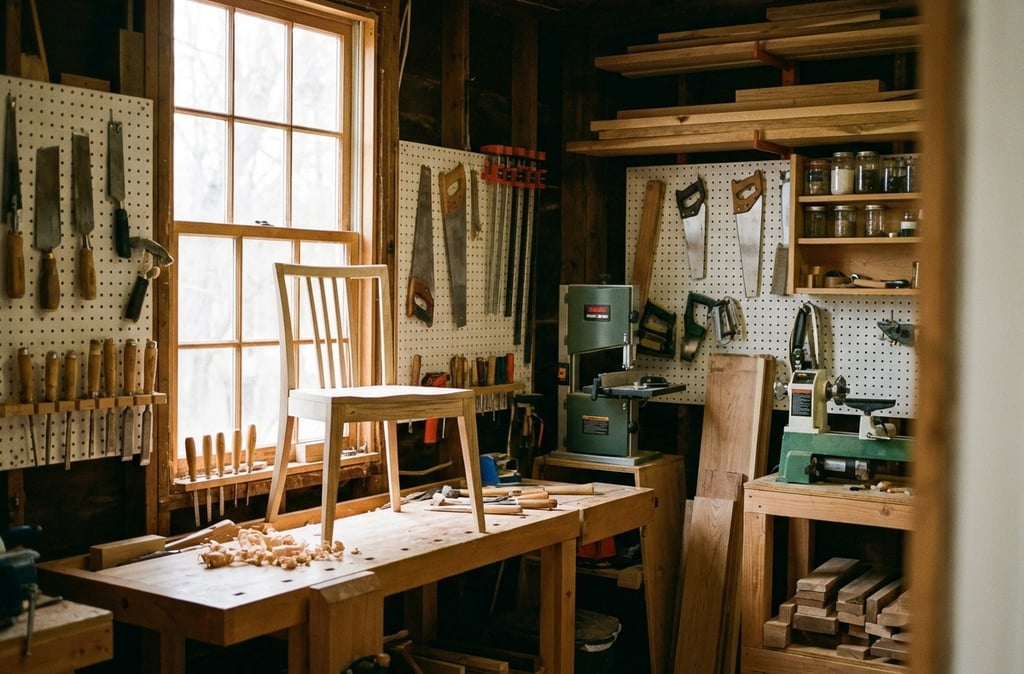
Why Size and Cost Don’t Matter (Hot Take Coming in 3...2...1)
Hollywood made us believe "bigger is better"—which is why I expect a woodworking version of Avengers right in your garage. But guess what? Some of the most impressive woodworkers swear by their tiny caves, basements, or even rental sheds.
A smaller shop is like a game of Tetris—it teaches you efficiency and focus. Mobile tool bases? Fold-down benches? Oh yes, your shop can moonlight as a Transformer with just a few tweaks.
Also, the price tag isn’t your BFF here. Instead of throwing cash at the latest shiny gadgets, start with the basics, maybe buy secondhand, or even DIY some solutions (no, you don’t have to be Bob Vila). That budget you save? Spend it on the good stuff—quality wood and finishes that’ll make your projects sing.
*Takeaway*: Think of your space and budget like a mullet—a business in the front (smart essentials), party in the back (creative upgrades over time).
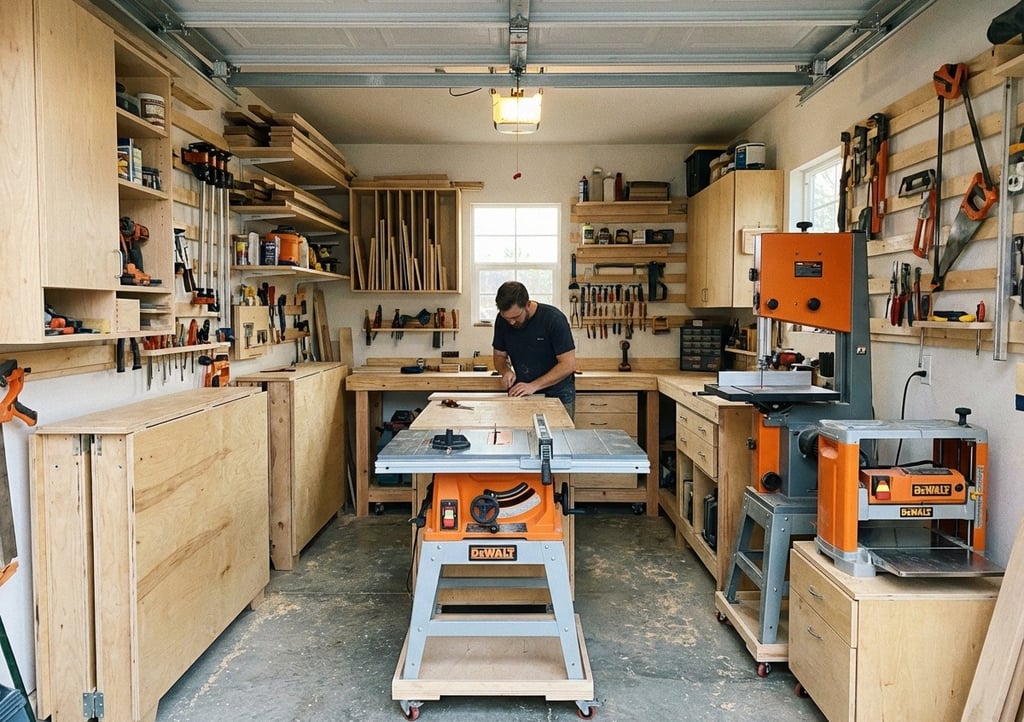
Essential Zones for Any Small Shop
*Because even small kingdoms need organized provinces.*
1. Tool Storage Zone
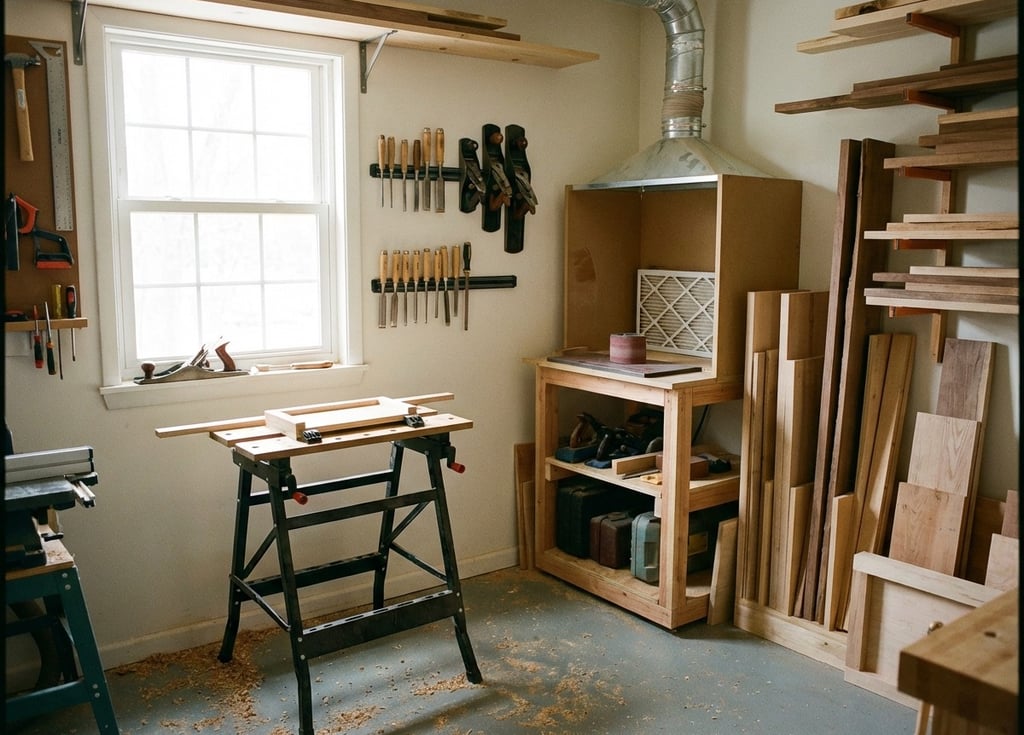
Magnetic strips, pegboards, or custom wall cleats are your new BFFs. They keep stuff visible and off your precious surfaces. No more “Where is my hammer?!” jokes—unless you want to keep your sanity.
2. Workbench Zone
This is your stage. Ideally near a window because natural light makes you look like a woodworking superstar. Bonus points for folding or wall-mounted benches that vanish when not in use—poof! Magic.
3. Cutting Zone
Your saws belong here. Want to move your table saw? Slap some wheels on that bad boy. Bonus points for grouping milling machines like jointers and planers nearby—for a workflow smoother than your favorite jazz playlist.
4. Sanding and Finishing Zone
Dust is the arch-nemesis of clean air and healthy lungs. Designate a corner with good ventilation, keep your safety gear and finishing supplies handy, and maybe invest in a dust collector (unless you enjoy sneezing all day).
5. Material Storage Zone
Keep raw and cut wood near the entrance—because lugging planks through the shop is a workout nobody asked for. Vertical storage is your secret weapon here; think of it like your wood’s personal VIP lounge.
*Takeaway*: Organize your little kingdom so the workflow flows better than your morning coffee.
Budget-Friendly Tool Essentials
*AKA, what you actually need before you start collecting sawdust disasters*
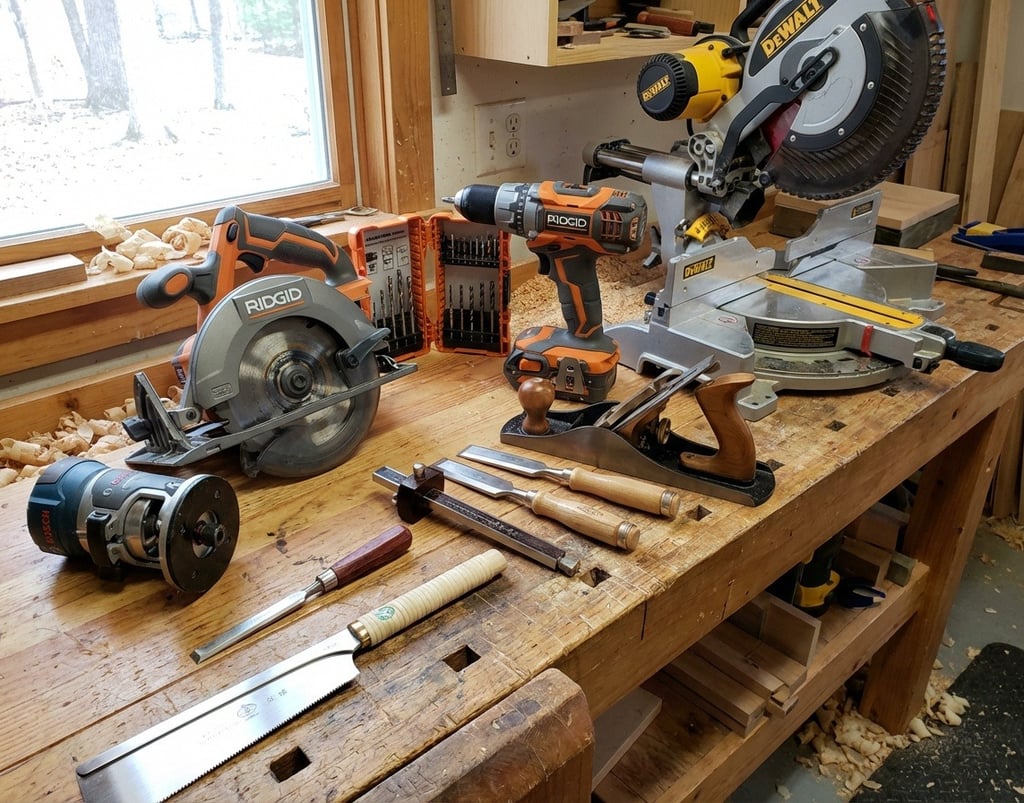
- Drill and Drill Bits — The Swiss Army knife of woodworking, but louder and cooler.
- Circular Saw — Portable, versatile, and you can cut a foot off just about anything.
- Table Saw — Precision cuts without precision freak-outs, ideally on wheels for your space’s sake.
- Miter Saw — Because every project deserves a sharp crosscut and a perfect bevel.
- Router and Bits — For fancy edges and joinery that screams “professional.”
- Basic Hand Tools — Chisels, hammer, screwdrivers, measuring tape—the grand unholy toolbox essentials.
- Sanding Tools — Orbital sander or good ol’ hand blocks; pick your sanding weapon.
- Safety Gear — Eye protection, ear muffs, and dust masks. Because your ears and lungs deserve a good retirement plan.
*Takeaway*: Start with these essentials before diving into every gadget you’ll only use once.
Smart Storage and Organization Hacks
*Because clutter is the arch-nemesis of creativity.*
- Exploit your vertical real estate like you’re playing woodworking Jenga.
- Fold-down surfaces = instant extra workspace and instant disappearance trick.
- Repurpose furniture or wooden crates to stash tools and materials (bonus: looks cooler than plastic bins).
- Labels: not just for kindergarten classrooms anymore. If you can’t find it quickly, it doesn’t exist.
- Keep your everyday heroes accessible, and banish infrequent tools to higher shelves or back corners.
*Takeaway*: A tidy shop is a happy shop. Plus, it keeps your sanity intact (mostly).
Planning Your Workflow Efficiently
*Because walking 100 steps for a screwdriver is the worst cardio.*
Visualize your shop like a mini assembly line: raw materials come in, get cut, milled, assembled, sanded, and finished. Arrange your zones accordingly—think of it as the IKEA walkthrough but for woodworking.
Grab some graph paper or design software (free stuff works) and sketch your kingdom. Leave room for those long boards and dust collection logistics—because nobody wants sawdust tornadoes.
*Takeaway*: Flow = productivity. Chaotic wandering = sore back and wasted time.
DIY Shop Projects to Start Cheap
*For that sweet satisfaction of saying “I built this.”*
- Folding workbench made from plywood and hinges (fold it up to hide your sweat and clutter).
- Wall cleats for hanging tools and accessories (easy, cheap, and feels fancy).
- Mobile carts with casters—because rolling away from mess > cleaning it immediately.
- DIY dust collection boxes and barriers to keep your lungs happy without breaking the bank.
- Vertical lumber racks or overhead storage that turn your ceiling into a treasure trove.
*Takeaway*: Your best tool is your creativity—especially when your wallet’s on a diet.
FAQs (Because Everybody’s Googling This Stuff)
Q: What’s the minimum space needed for woodworking?
A: About 100 square feet, if you’re a ninja of organization and vertical storage.
Q: Best starter tools under $500?
A: Cordless drill set, circular saw, jigsaw, and some good hand tools. It’s like the Avengers origin story of woodworking gear.
Q: How do I dust-proof a garage shop?
A: Plastic sheeting partitions, a small dust collector or HEPA-equipped vacuum, and stick to sanding in a designated corner. Your respiratory system will thank you.
*Takeaway finale*: Your woodworking shop is a tool, not a status symbol. Size and cost are overrated—focus on smart zones, core essentials, and clever organization. Whether you’ve got a closet or a garage, start small, start smart, and build like a boss.