
Accuracy over appearance
Discover why focusing on accuracy over appearance in woodworking projects ensures durability, tight joinery, and long-lasting success in your shop projects.
PROJECT BLOG 1 - BEGINNER
Sawdust BuzzBlog Editorial Team - Led by AJ “Buzz” Eichman
2/9/20265 min read
Accuracy Over Appearance: Skill-Building with Purpose in Shop Projects
You know that moment when your woodworking project looks like it belongs on a magazine cover, but the doors won’t close and the drawers stick like they’ve got a vendetta? Yeah, it’s like putting lipstick on a pig—or worse, a raccoon. Let’s be real: focusing on looks alone is the craft equivalent of swiping right on style but ignoring substance. Cue dramatic pause. Accuracy beats appearance every single time. Your project’s long-term mojo depends on it, not just its Instagram debut.
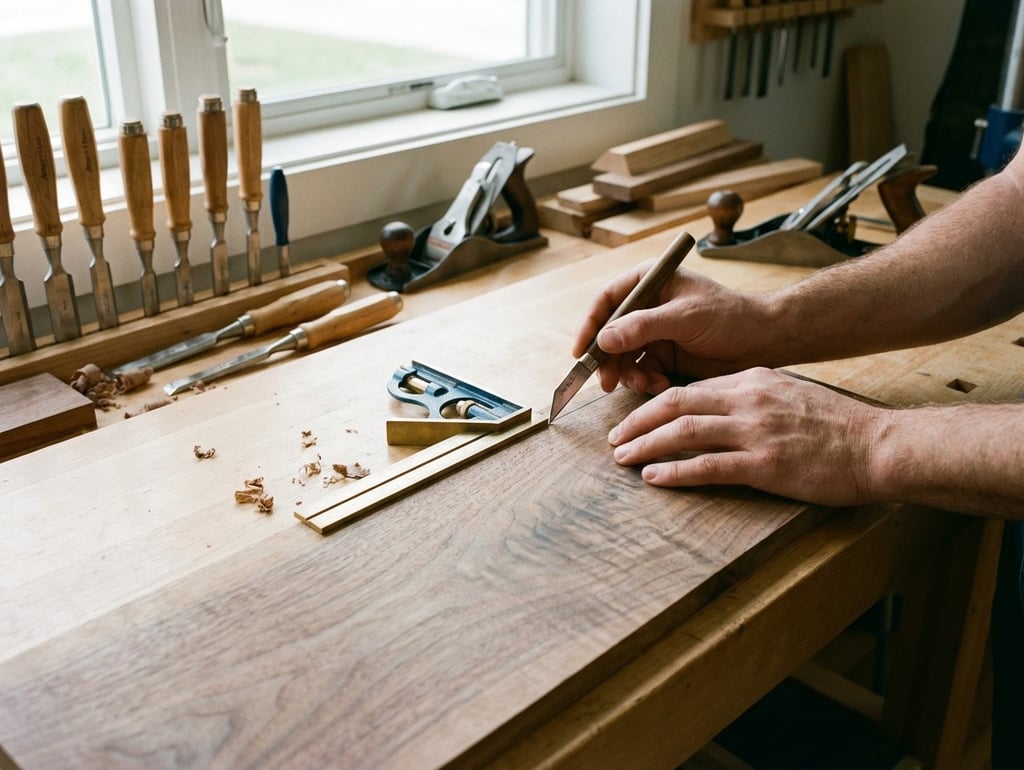
Why Accuracy Trumps Appearance in Woodworking and Shop Projects
Accuracy is basically your project’s GPS. It tells you exactly where to go and how to get there without ending up in the land of wobbly shelves and skewed edges. Imagine building a cabinet and then realizing your side panel was cut too short—*oops.* Sure, it might look fine to your distracted friends, but your cabinet’s about as functional as a chocolate teapot.
Accurate cuts and measurements are your insurance policy for sturdier joints, less wood waste (and no extra trips to the lumber yard), and fewer facepalm moments during assembly. Trust me, my 7-year-old asked if I was done talking about tax deductions; I said “never.” Same energy when it comes to accuracy—it builds confidence and makes even the nastiest joints come together like they’re old pals.
Remember: a flashy finish can mask a hot mess, but precise accuracy screams professional without saying a word. So, slap on that measuring tape, not just your favorite stain.
Precision vs Accuracy: Understanding the Key Differences
Hot take coming in 3...2...1—precision and accuracy are not the same thing. I know, your inner Excel nerd might scream blasphemy, but hear me out:
- Accuracy: How close your measurement or cut is to the “truth” or target (cutting a board to exactly 24 inches).
- Precision: How consistently you can repeat that cut or measurement (making ten boards, all almost exactly 24 inches).
You can be precise without being accurate (think: always off by 1/8 inch but at least consistent), or accurate without being precise (your first cut is spot on, but the next five look like a game of darts gone rogue).
In woodworking, accuracy is your foundation—you gotta nail that true dimension first. Precision steps in to save the day when you need to crank out multiples with minimal variation. Trying to build a killer jig? Precision is your best friend. But accuracy is your trusty sidekick, always there to keep you honest.
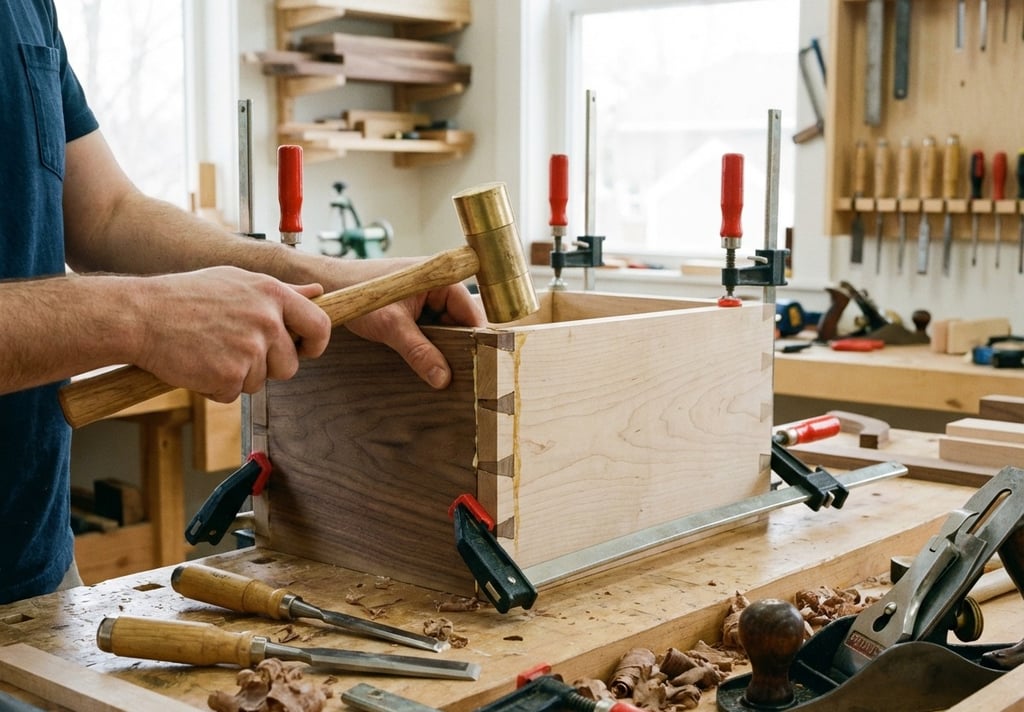
When Accuracy is Critical in Shop Projects
Spoiler alert: not every cut needs to be Michelin-star-accurate right from the start. Early rough cuts? Get those a bit oversized and don’t sweat the small stuff. This is your chance to channel your inner Bob Ross and imagine those “happy little accidents” getting smoothed out.
But accuracy demands a standing ovation (and a steady hand) during these moments:
- Joinery: Dovetails, mortise-and-tenon, box joints — these babies demand exact dimensions to snug up perfectly without you turning the wood into modern art.
- Assembly: When those parts snap together like puzzle pieces, even tiny errors (hello, 0.025 inches) can cause your whole project to wobble like a dad joke at Thanksgiving.
- Finish work: Doors, drawers, panels—these need tight tolerances to slide, swing, and shimmer the way they were born to.
Ignore accuracy here, and welcome to the world of rework, frustration, and “other uses for this wood” (hint: firewood).
Tools and Techniques for Achieving Repeatable Accuracy
Now before your eyes glaze over like a Krispy Kreme, here are some tools and techniques that’ll keep you on the straight and narrow:
Essential Tools
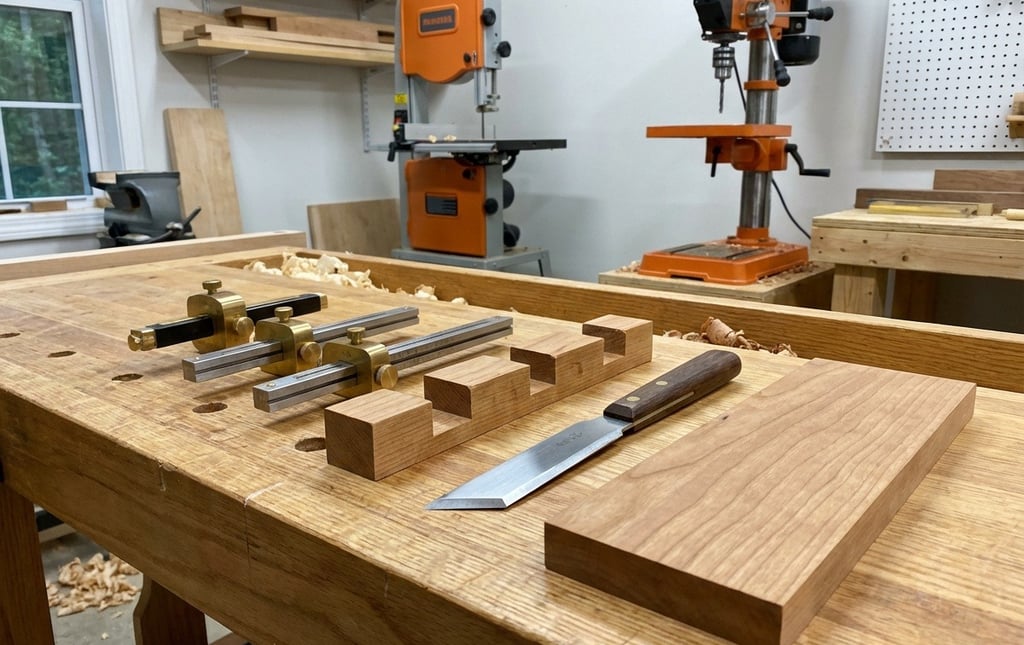
- Marking Gauges: Like a loyal compass for your saw, giving repeatable scribe lines with no guesswork.
- Reference Surfaces: Your reigning ruler—a flat, true face or edge that all measurements bow down to.
- High-Quality Squares: No, not the board game—think Mitutoyo or similar, checking your angles so they don’t look like your failed attempt at rocket science.
- Stop Blocks and Jigs: The Ninja tools that stop your saw from going rogue.
- Knife Marking: Because pencil lines are for the faint of heart. A sharp knife cuts a clear line that won’t smear or confuse your inner perfectionist.
Techniques
- Measure Twice, Cut Once: If this sounds like a bedtime mantra, it should be. Double-check everything unless you enjoy scrap piles.
- Use a Reference Board for Layouts: Thinking outside the box? Use a fixed board for repeatable markings; it beats eyeballing every single time.
- Establish and Work from a Single Reference Face: Like having one true north, this keeps all parts singing the same tune.
- Create and Use Repetitive Jigs: When you need ten identical cuts, jigs are your fairy godmother.
Common Pitfalls and How to Avoid Them
Look, we all have rookie moments. Here’s a cheat sheet of what to dodge on your path to accurate glory:
- Eyeballing measurements or relying too much on a tape measure: Unless you’ve got X-ray vision or a superpower, back this up with gauges.
- Skipping a single reference face: This is like trying to bake without measuring cups. Disaster.
- Compounding small errors: Think of it like assembling IKEA furniture with missing screws—tiny mishaps add up.
- Chasing perfect accuracy from square one: Rough cuts are your “practice canvas” — save the finickiness for later.
- Covering mistakes with good looks: A shiny finish won’t fix those sneaky gaps or loose joints. (Sorry.)
Remember: accurate fundamentals mean better results— and yes, this will be on the test.
FAQ
How precise do measurements need to be for woodworking?
It depends on your adventure. Machine-tool projects often aim for tolerances tighter than 0.010 inches, while hand-tool enthusiasts focus on fit and feel. Generally, tighter joinery calls for measurements within 1/32 inch—a hair’s breadth for wood but a world in quality.
What tools ensure accuracy in joinery?
Marking gauges, high-quality squares, jig setups, stop blocks, and the trusty knife mark all help keep your cuts in line and your joints cozy.
Can early errors be corrected later in a project?
Sure, rough cuts can be trimmed and smoothed, but those joinery blunders? Harder to fix than a bad haircut. Nail accuracy early but remember: some tolerance in rough stages can save your sanity.
If you’ve stuck with me this far, congratulations. You’re officially my favorite workshop warrior. Now go forth, measure twice, cut once, and maybe throw in a dad joke while you’re at it. Your future self (and your cabinet doors) will thank you.