
Assembly & Holding Tools
Discover why clamps are essential holding tools in woodworking, from types to practical tips for efficient assembly and flawless glue-ups.
TOOLS 2 - POWER TOOLS / CUTTING / HOLDING
Sawdust BuzzBlog Editorial Team - Led by AJ “Buzz” Eichman
2/9/20264 min read
Assembly & Holding Tools: Clamps as Essential Tools
When you’ve spent enough time in a workshop, you quickly learn that clamps aren’t optional—they’re essential. Whether you’re working with wood, metal, or any kind of fabrication, clamps hold your work steady, keep things aligned, and save you from a lot of frustration down the road. If you skip proper clamping or rely on just one kind of clamp, you’ve probably felt the cost—misaligned joints, crushed edges, or glue-ups that just don’t hold.
In this piece, I’ll break down why clamps matter, the common types you’ll find most useful, and practical tips for choosing and employing them in your shop. No fluff—just what works.
Why Clamps Matter in Assembly and Holding
Clamps solve a simple problem: holding pieces firmly together so you can work on them without things slipping or shifting. That sounds straightforward, but it’s where most folks get tripped up.
Without clamps, your materials move when you’re gluing, drilling, or cutting. Parts slip out of alignment, joints weaken, and you waste time fixing mistakes that could’ve been avoided. Clamps don’t just hold—they apply even pressure, which is critical in woodworking to avoid dents or warping. Plus, having your hands free means you can work safer and smarter.
Common Types of Clamps and When to Use Them
There are plenty of clamp styles out there, but a few consistently prove their value in everyday work. I’ll stick to those that have kept me out of trouble and made the toughest jobs possible.
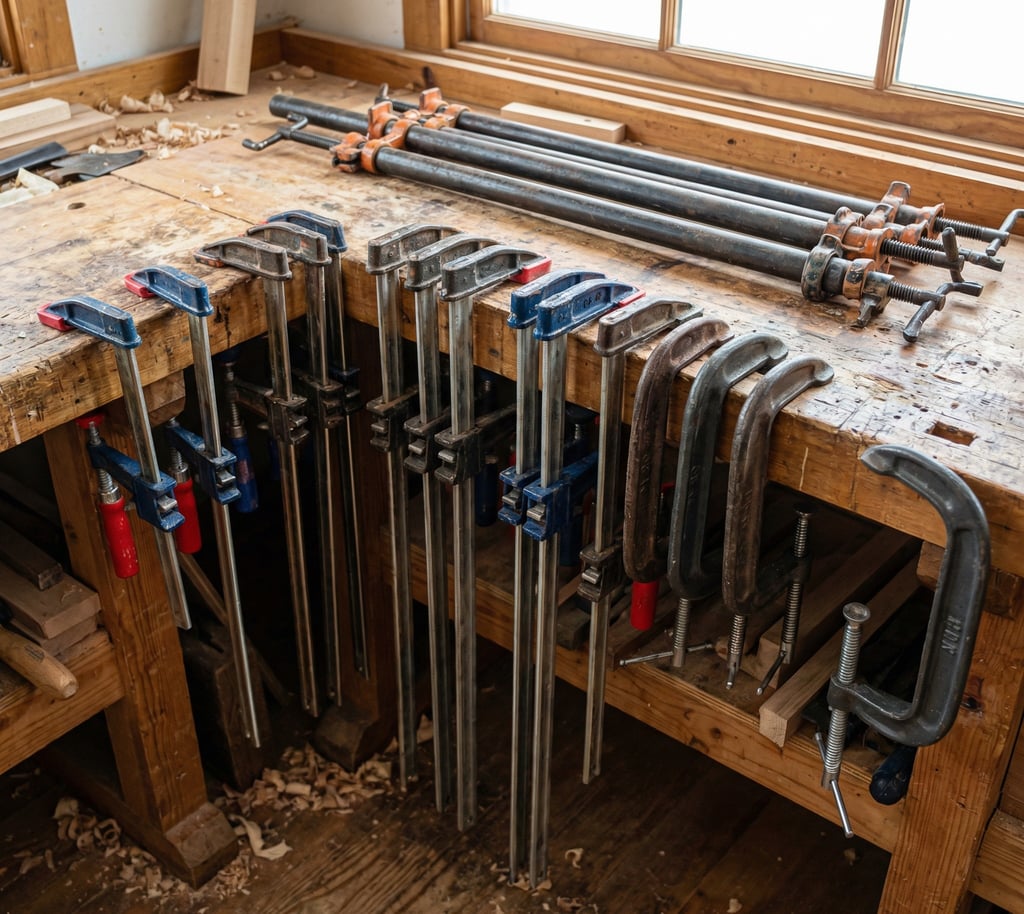
1. F-Clamps (Bar Clamps)
These are your everyday workhorse clamps. The sliding arm on an “F” shaped frame lets you adjust for all sorts of tasks—from glue-ups to holding pieces for nailing or drilling. They offer good reach and strong pressure, which makes them solid for larger projects. Just be mindful of their size and weight if you’re clamping small parts.
2. Parallel Jaw Clamps
If you want really even pressure, parallel jaw clamps are hard to beat. Their jaws stay perfectly parallel as you tighten, which means no twisting or bowing on panels. I prefer these for cabinet-making or anything with flat surfaces that can warp if clamped unevenly. They sometimes double as spreaders, adding a bit of versatility.
3. Pipe Clamps
Need to do large glue-ups or clamp irregular shapes? Pipe clamps give you the flexibility to change pipe length and handle big assemblies without breaking the bank. They can be bulky, but when your project demands, they’re worth having around.
4. C-Clamps
C-clamps pack a strong squeeze but have limited throat depth. They’re more common in metal shops, but in woodworking, they’re handy when you want heavy pressure in tight spaces. Always protect your wood with pads—ask me how I know what happens when you don’t.
5. One-Handed Quick-Release Clamps
Speed matters. For aligning parts or doing quick presses, I rely on these. You can set or release them without fiddling around, preserving workflow and reducing fatigue.
6. Face Clamps
Face clamps distribute pressure over a wider area, which is useful when working with pocket hole joints or delicate surfaces. Their smooth contact keeps your work looking clean.
7. Toggle Clamps
Toggle clamps lock in place quickly and with solid holding power, making them ideal for jigs or repetitive machining operations. They’re less about general assembly and more about fixture building.
Holding Tools Beyond Clamps
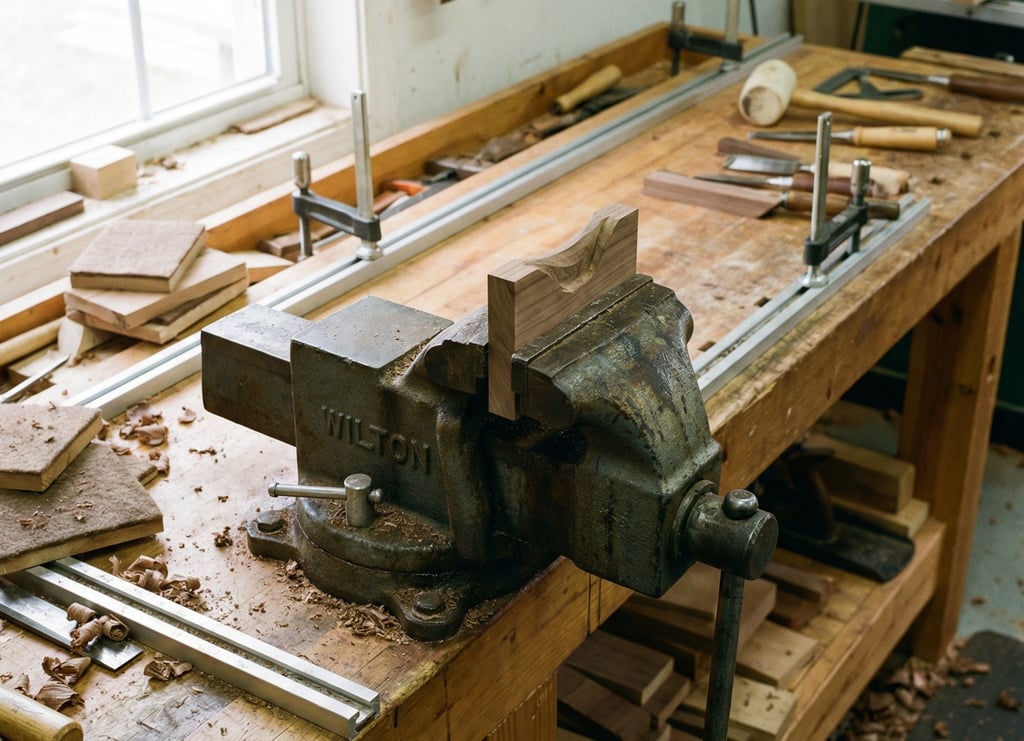
Clamps aren’t everything, though. A good vise mounted to your bench is invaluable for holding smaller parts firmly when you need both hands free. Workbench clamping systems—like Kreg’s Klamp Trak—turn your entire assembly table into a versatile holding platform, especially useful for complicated glue-ups or jig setups.
How to Choose and Use Clamps Effectively
Not all clamps are created equal for every task. Here’s what I look for to avoid common pitfalls:
- Throat Depth Matters: Make sure the clamp can reach where you need to apply pressure.
- Protect Your Work: Never clamp wood directly; use scrap wood or pads to avoid dents and marks.
- Use Enough Clamps: Even pressure is key during glue-ups. Too few clamps won’t close gaps or hold joints tightly.
- Avoid Over-tightening: Clamp tight enough to hold, but not so tight you crush the wood or distort joints. This is one of those steps that feels optional until you’ve had to fix it later.
- Incorporate One-Handed Clamps: They save you time and let you make small adjustments without fuss.
Common Clamping Mistakes
- No Pads Under Clamps: Wood surfaces dent easily; clamps can leave ugly imprints.
- Over-tightening: You risk misalignment and damaged parts.
- Too Few Clamps: Weak glue joints and poor alignment are often symptoms of insufficient pressure.
- Relying on Just One Clamp Type: It limits your options and can compromise quality.
---
Frequently Asked Questions
Q: What’s the best clamp for woodworking glue-ups?
A: I trust parallel jaw clamps here. The even pressure and jaw alignment after tightening really prevent common glue-up issues.
Q: How many clamps do I need for a basic woodworking setup?
A: Four to six clamps of assorted types cover most projects. More clamps rarely hurt and often help you keep pressure even.
Q: Are C-clamps right for woodworking?
A: They can work fine if you use pads and limit their use to spots needing heavy, localized pressure.
Recommended Clamps Worth Considering
- IGM Blue Lever Clamps: Integrate with bench tracking systems for precise work holding.
- Kreg Face Clamps: Perfect for pocket hole assembly and delicate parts.
- Bessey Parallel Clamps: Standard for cabinetry and panel glue-ups.
- Automaxx Klamps with Klamp Trak: Convert your bench into a multifunctional glue-up station.
- Wooden Cam Clamps: A traditional choice for fine woodworking and delicate tasks.
Final Thoughts
Clamps aren’t glamorous, but they’re the quiet workhorses that keep your projects together—literally. Over the years, I’ve learned that investing in a solid, varied clamp collection and using each clamp for what it’s designed to do makes a noticeable difference in the outcome and efficiency of your work.
Ignore or skimp on clamping, and you’ll find out where shortcuts cost you the most—fixing avoidable mistakes. Embrace clamps as essential allies in your workshop, and you’ll save yourself time, headaches, and a few regrettable repairs.
In my shop, clamps aren’t just tools—they’re peace of mind.