
Frequently used tools vs occasional tools
Master tool placement & organization by learning how to separate frequently used tools from occasional ones for a tidy, efficient woodworking shop.
TOOLS 2 - POWER TOOLS / CUTTING / HOLDINGSHOP 2 - BENCH / ORGANIZATION / ELECTRICAL
Sawdust BuzzBlog Editorial Team - Led by AJ “Buzz” Eichman
2/14/20264 min read
Frequently Used Tools vs Occasional Tools: Mastering Tool Placement & Organization
Ah, the eternal struggle of any woodworker: your tools either hide better than your remote or crowd your workspace like uninvited guests at a party. Let’s get real — a tidy shop isn’t just about looking pretty (although that’s a nice bonus). It’s about working smarter, not harder, by sorting tools based on how often you actually use them. Because, spoiler alert, that rusted old jointer you pull out twice a year doesn’t deserve prime real estate next to your hammer.
Ready to turn your tool chaos into efficient harmony? Put on your metaphorical hard hat and let’s roll.
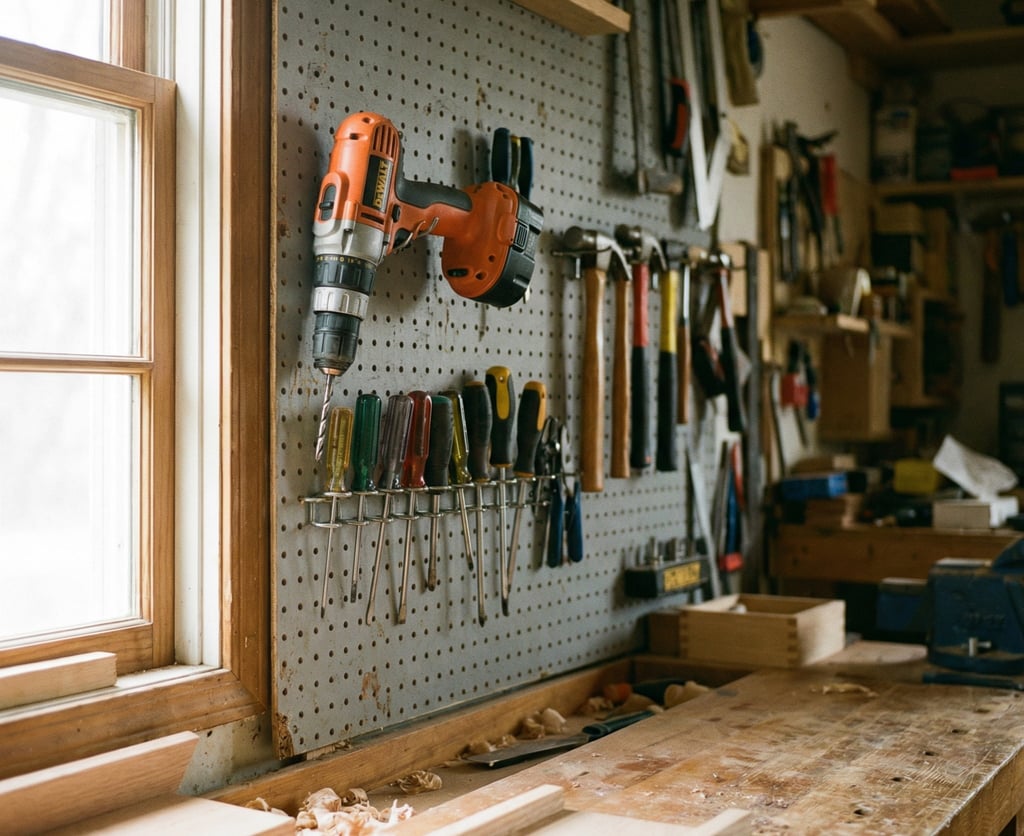
Frequently Used Tools: Keep ‘Em Close or Face the Wrath of Lost Time
If you’re wielding a hammer or screwdriver like Thor’s mighty Mjölnir every. single. day, it makes zero sense to play “Where’s Waldo?” every time you need one. Frequent tools need VIP treatment.
Placement Tips (Because You Deserve Less Running Around)
- Within Arm’s Reach: Imagine your main workbench is that comfy couch, and these tools are your favorite snacks—always within grabbing distance. Hang your screwdrivers, hammers, and measuring tapes on a pegboard or stash them in the top drawer of your tool chest. If it’s not handy, it’s just a trap.
- Wall-Mounted Racks & Pegboards: Vertical space is your friend here. Pegboards let you spot your tools at a glance like panning for gold. Visual organization = less panic searching = more wood cutting.
- Nearby Specialty Tools: Clamp fans, listen up! Keep clamps close to your assembly table and drill bits right next to the drill press. You don’t want to be doing a full “tool safari” mid-project.
Frequent Flyers (aka the Usual Suspects)
- Pegboard home for hand tools near the bench.
- Clamps hanging out on racks within arm’s reach.
- Fancy drawer dividers shuttling chisels and saws at a moment’s notice.
*Takeaway? Your workflow should look more like a well-coordinated dance and less like a frantic scavenger hunt.*
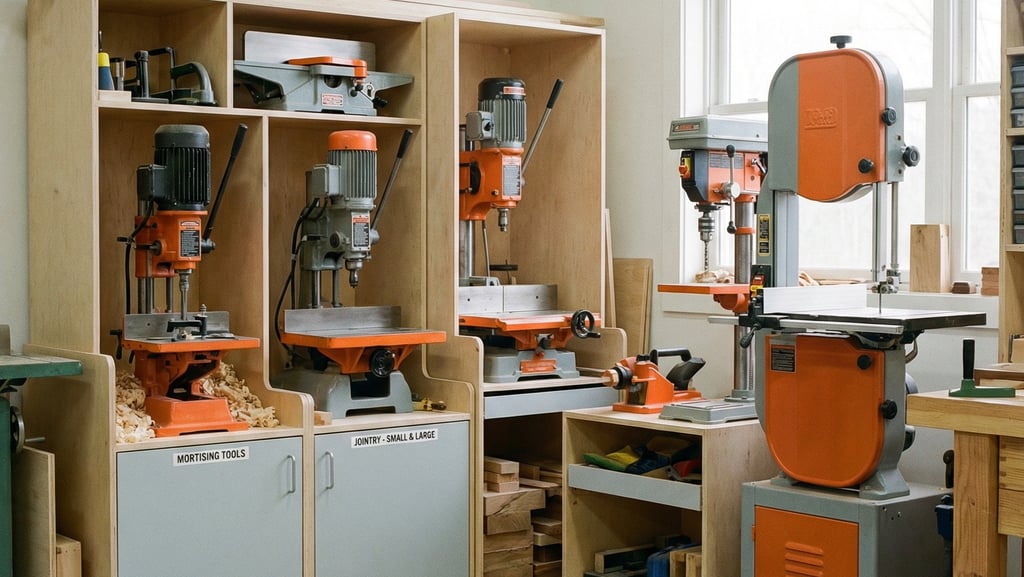
Occasional Tools: Store Them Somewhere, Anywhere but Here
That giant mortiser or the jointer you only call into action once in a blue moon? They deserve their own special hideout. Because let’s face it, you don’t want to trip over them while you’re trying to nail a simple project.
Placement Tips (AKA How to Hide the “I Don’t Use You Often” Tools)
- Dedicated Storage Zones: Fancy cabinets, rolling carts, or that lonely back corner of your shop make perfect “vacation homes” for occasional tools. They don’t have to be front-row but should still be easy to find when summoned.
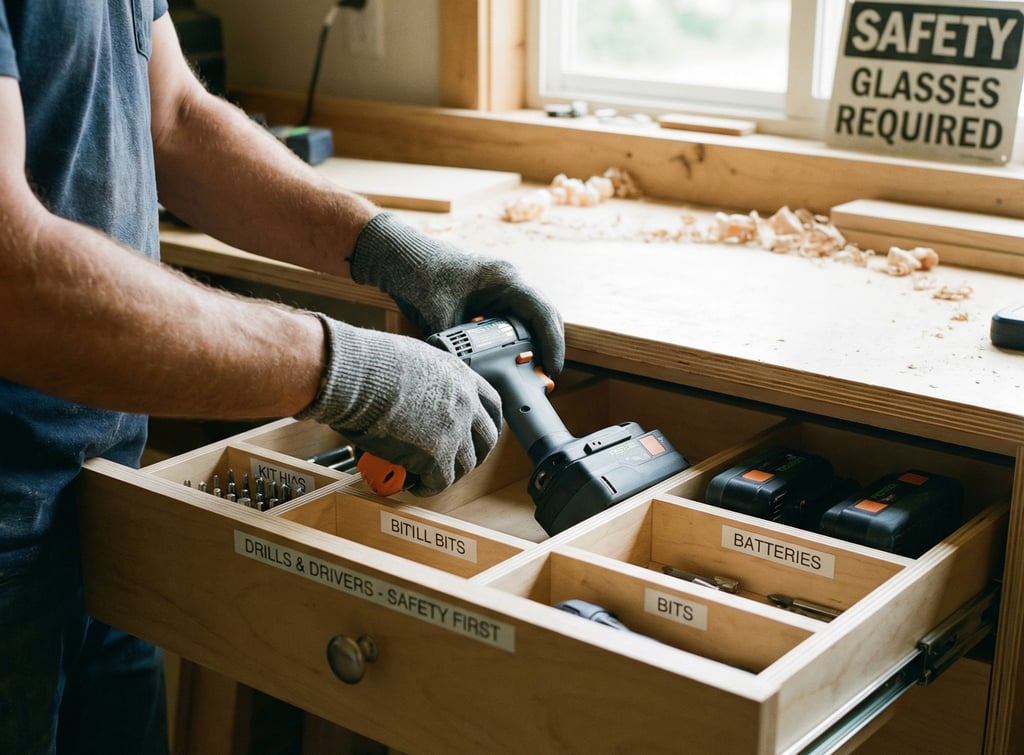
- Labels Are Your Best Friend: Nothing screams “amateur hour” like digging through drawers without labels. Give every storage zone a name tag and stick to it.
- Drawers or Shelves for Bulk: Deep drawers, slide-out organizers, and bins are great for the awkwardly shaped, rarely used stuff—like specialty jigs and extra blades.
Occasional Guests (Because They’re Worth the Clutter)
- Labeled chests with clear compartments.
- Slide-out drawers for blade sets and all those bits.
- Rolling tools carts for when you want to flex on a big project.
*Reminder: Just because you don’t use them every day doesn’t mean they’re useless. They just need their own swanky closet.*
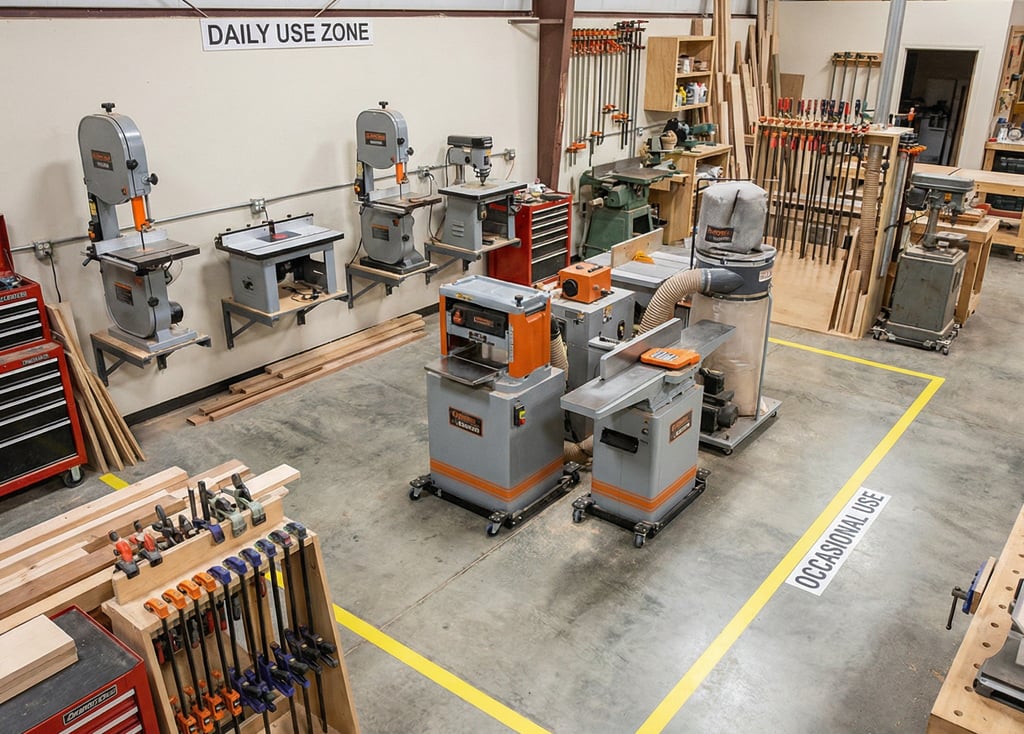
Strategies for Tool Zoning and Layout: Channel Your Inner Shop Feng Shui
The key to a zen woodshop is strategic “tool zoning.” Think of it like organizing your kitchen—knives near the cutting board, fridge near the prep counter. It’s all about flow, baby.
Key Moves for Maximum Efficiency
- Workflow Grouping: Nestle related tools side-by-side. Jointers hang out with planers and table saws to keep milling smooth. Cue dramatic pause: this is how pros flow.
- Wall Storage for Big Guns: Stationary beasts like bandsaws and router tables belong against the wall. They hog space but need to stay handy.
- Mobility = Magic: Put your heavy hitters on wheels when you can. This way you can rearrange your workshop kingdom like a boss depending on the project at hand.
*Remember: Your workspace should work with you, not against you. Unless you enjoy the chaos—but let’s not.*
Why Organize by Usage? Because Time Is Money and Safety Is Priceless
- Time Savings: If you spend less time hunting tools, you get more wood-shaving time. It’s simple math.
- Safety First: Cluttered shops = tripping hazards and accidental slices. No one wants to star in their own DIY horror flick.
- Longer Tool Life: Tools get cranky when tossed around like last season’s fashion. Proper storage keeps them sharper, longer.
- Workflow Nirvana: Logical layout = satisfying project rhythm = you, becoming the woodworking master.
Common Slip-Ups: Lessons from the Trenches
- Treating All Tools as Equal: News flash: Not all tools are created equal. Prioritize like a pro.
- Cramping Big Tools: Putting your table saw up against the wall? You’re basically telling it, “No space for you.” Spread out, my friend.
- Ignoring Labels: If your storage zones lack labels, welcome to “Dig and Despair.”
- Drawer Overload: Overstuffed drawers without dividers = chaos. Your chisels deserve better.
FAQ
Q: How do I decide if a tool is frequent or occasional?
A: Ask yourself this: Would I use this tool if my workshop was on fire? If yes, it’s frequent. If it’s only for those one-off “super special” projects, occasional territory.
Q: What are the best storage options for occasional woodworking tools?
A: Dedicated cabinets, labeled chests, deep drawers with organizers, and rolling carts all score high on the “easy to grab, out of the way” scale.
Glossary (Because we like to keep things fancy but understandable)
- Pegboard: Think of it as the tool version of your shirt rack—hang it up and see it all.
- Tool Zoning: Splitting your shop into “hangout spots” based on tool use and project flow.
- Drawer Dividers: The little fence-makers that keep your bits and pieces from turning into a chaotic mess.
There you have it, folks. Organize like a boss, work like a champion, and may your tools always be where you left them (no promises though).