
Garage vs basement vs shed
Explore the pros and cons of setting up a woodworking shop in a garage, basement, or shed to find the perfect space that fits your workflow and lifestyle.
SHOP 1 - INTRO / SPACE /LAYOUTEDITOR PICKS
Sawdust BuzzBlog Editorial Team - Led by AJ “Buzz” Eichman
2/11/20266 min read
Garage vs Basement vs Shed: Understanding Your Space (aka The Ultimate Workshop Smackdown)
So, you want to set up a woodworking shop in your home, huh? Great! Because nothing screams “weekend warrior” quite like debating how many power tools can fit into a garage without hitting your car—or explaining to your spouse why the shed is suddenly “the man-cave.” cue dramatic pause Are you Team Garage, Basement Boss, or Shed Supreme? Grab your measuring tape and your dad jokes — we’re diving in.
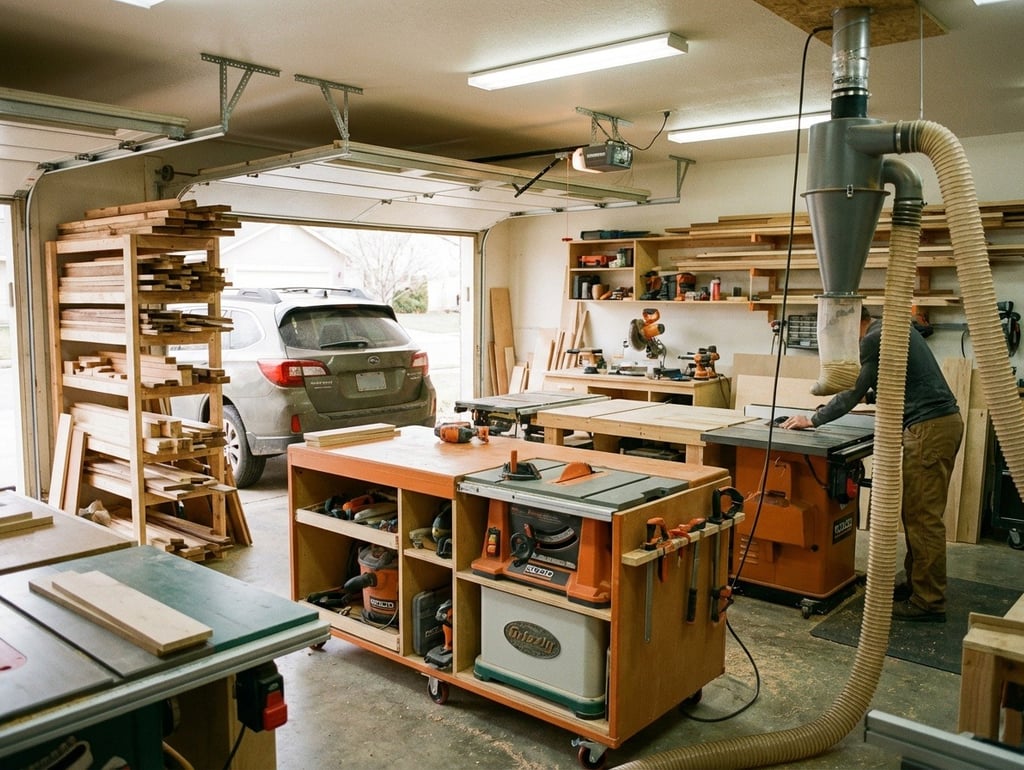
Garage Workshop: The Classic Favorite (With a Side of Chaos)
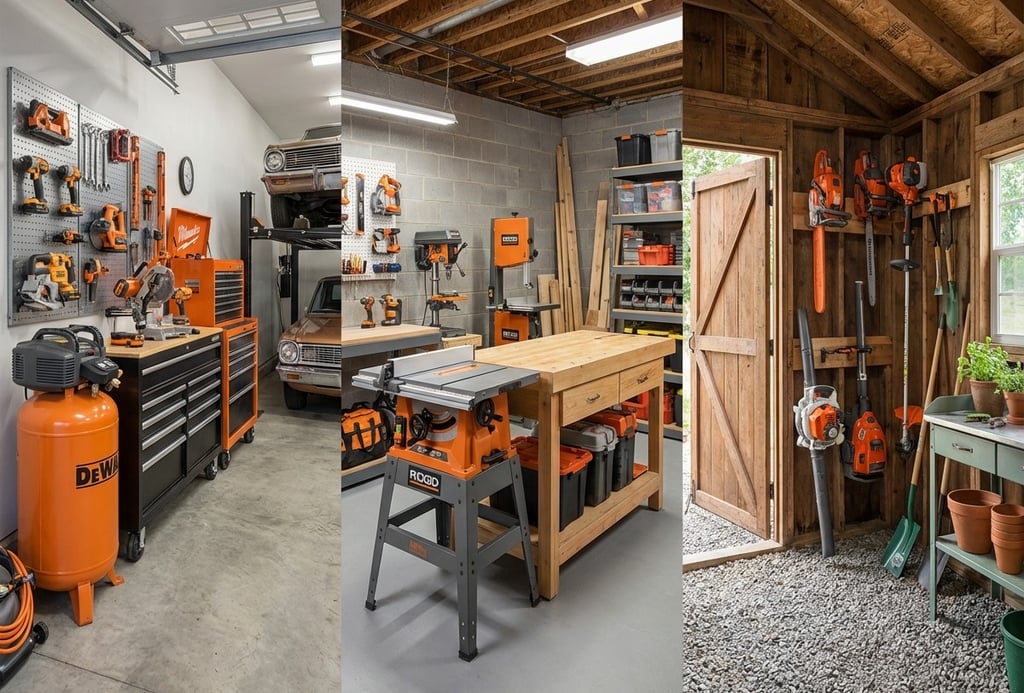
Let’s be real—garages are the default workshop choice for many hobbyists. Why? Because they’re there, they have doors, and, if you’re lucky, there’s a spare spot not taken up by a minivan or a mountain bike.
**Pros:**
- Accessibility: Rolling lumber and gear in and out is a breeze. Basically, it’s like your workshop’s own shipping dock… minus the forklifts.
- Electrical Access: Outlet galore! Most garages are wired with at least enough juice to power your tools—and maybe charge an electric vehicle, if you're into that.
- Space: Two-car garages can often moonlight as respectable workspaces (and maybe cram a car or two too, if you’re ambitious).
- Ceiling Height: Tall enough for bigger machines like your table saw or drill press. Bonus points if you can install an overhead hoist.
- Functionality: Parking and woodworking — why choose when you can pretend to do both?
**Cons:**
- Shared Space Drama: Ever try to build a birdhouse while someone’s squeezing a minivan in? It’s like playing Tetris with plywood.
- Climate Roulette: Expect to feel the extremes—your garage is basically a giant thermos that leaks hot and cold air.
- Dust & Fumes: Cars + sawdust = an air quality horror story unless you’re on top of ventilation and dust collection.
- Security: Windows and extra doors mean extra locks. Your tools want Fort Knox-level protection.
**Layout Tips:**
- Section off a “work zone” with plywood walls or curtains so you don’t trip over your car keys.
- Install lumber racks right by the door. Future you will thank you when that 12-foot board fits through without gymnastics.
- Mobile tool cabinets = your new best friends. Wheels for days.
- Dust collection systems are your air’s BFF — don’t skimp.
**Takeaway:** Garages are like that reliable, slightly messy friend. They’re there when you need them, but sometimes you gotta clean up before the big project.
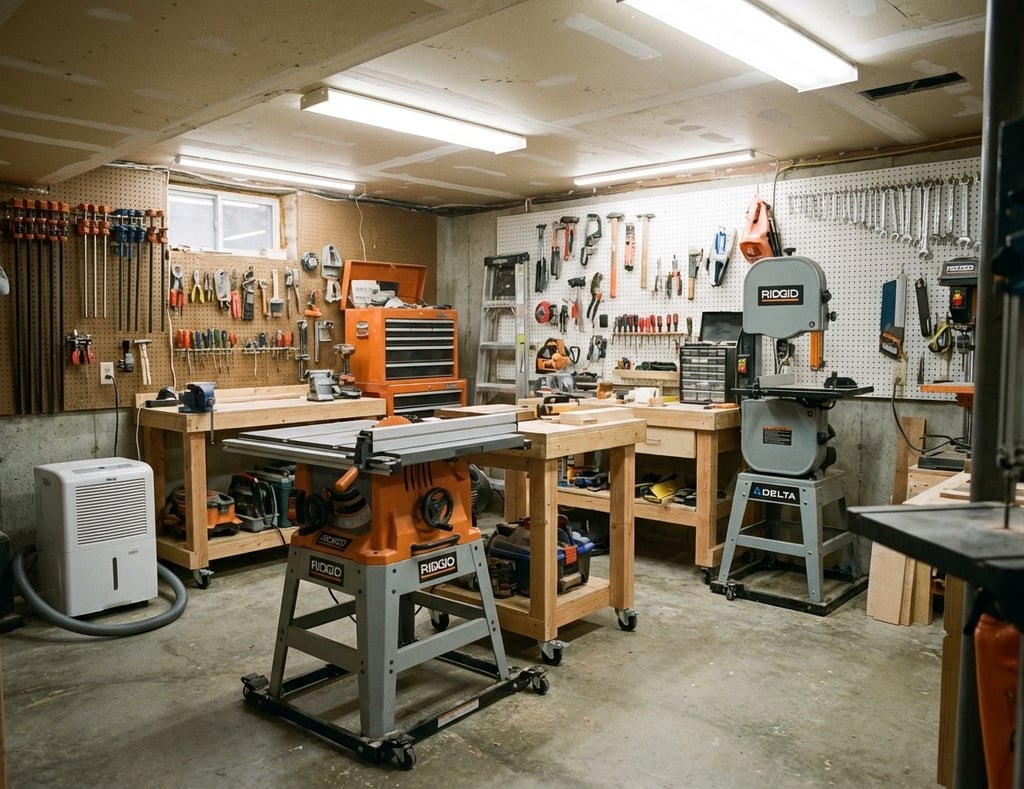
Basement Workshop: Your Climate-Controlled Dungeon of Dreams
Basements often get a bad rap as the go-to for forgotten laundry baskets and “what’s that smell?” But between us, they also make amazing woodworking workshops if you’re willing to get a little creative.
**Pros:**
- Temperature Stability: Basements are the Goldilocks of workshop temps — not too hot, not too cold, just right all year round.
- Dedicated Space: Separate from the hustle and bustle of family drama above (including my 7-year-old yelling “Are you done talking about tax deductions?” Spoiler: never).
- Security: Underground = harder for tool thieves to ninja steal your pricey jigsaw.
- Light and Dust Control: Limited windows help with controlling both dust and distracting sunlight glare.
- Power Capacity: Often wired for heavy-duty tools and machines needing more juice.
**Cons:**
- Material Transport Challenge: Staircases hate your lumber. Carrying big sheets down the stairs is basically a full-body workout.
- Ceiling Height: If you’re dreaming of standing upright under your dust collector, check your clearance twice.
- Moisture Monster: Basements can get damp AF. Dehumidifier, anyone?
- Ventilation Needs: Air circulation is non-negotiable unless you want to breathe sawdust and regrets.
- Lighting: Unless you’re a vampire, you’ll need some quality artificial lighting.
**Optimization Tips:**
- Use mobile benches because spaces can get cozy. Move and groove.
- Bonus points if you have a walk-out basement for easy access (yes, it’s a thing and it’s glorious).
- Invest in dehumidifiers and air filtration to keep the wood from warping and your lungs happy.
- Wall-mounted pegboards = keeping clutter off the floor and tools at your fingertips.
**Takeaway:** Basements are the cozy, quiet fortress where serious woodcats get stuff done — assuming you don’t mind a few trips up and down the stairs.
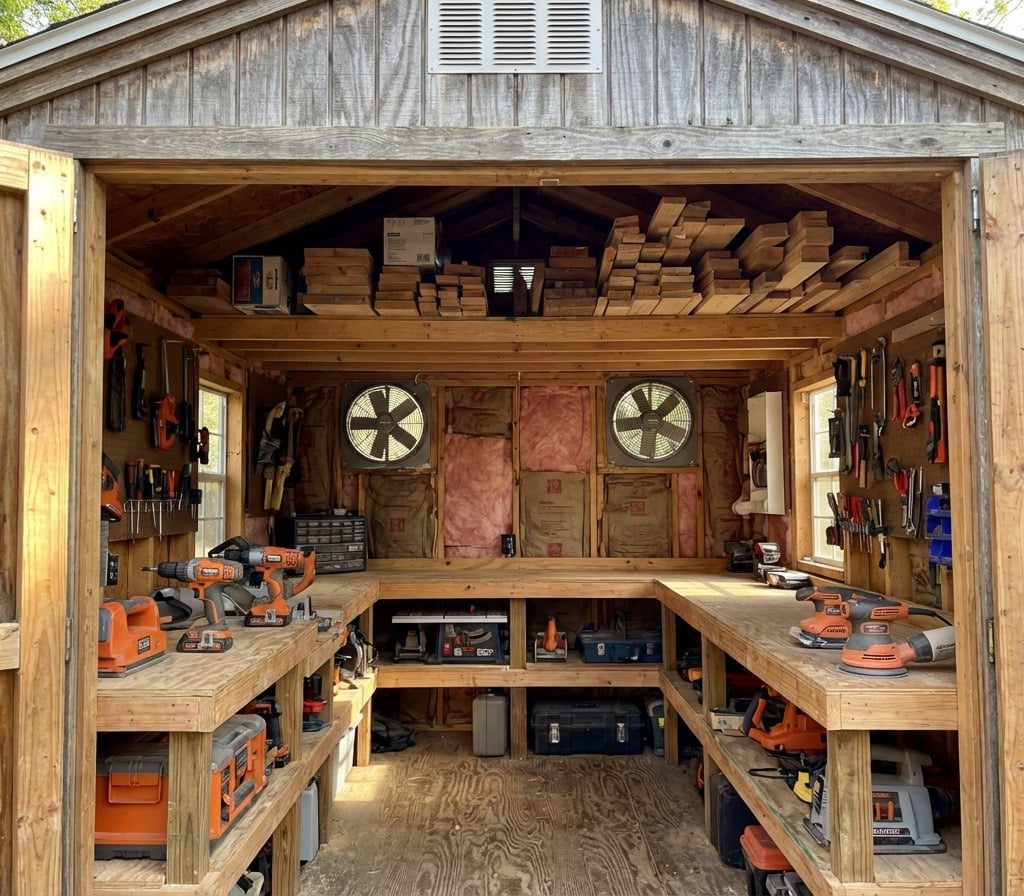
Shed Workshop: The Indie Artisanal Option (Also: Noise Complaints, Solved)
Need something that screams “DIY sanctuary” without sharing space or fighting for lighting? Enter the shed. The garage’s cool, lone cousin who’s entirely their own vibe.
**Pros:**
- Total Dedication: It’s your space. No cars, no laundry baskets, no suspicious smells.
- Custom Layout Freedom: Plan your benches, storage, and lighting exactly how you want. The shed is your oyster.
- Natural Light + Ventilation: Windows, vents, fans, HVAC — you name it, you can add it.
- Big Doors & Lofts: Double doors make moving big stuff a breeze. Loft storage means you can stash all that “I might need this someday” paraphernalia.
- Sound Isolation: No more power tool soundtracks interrupting your home theater sessions.
**Cons:**
- Startup Price Tag: Shed + electricity + climate control = potential wallet workout.
- Utilities Needed: You’ll probably have to wire it up yourself — or bribe an electrician to do it.
- Security Concerns: Tools are expensive. Invest in locks and alarms or risk the “great shed robbery.”
- Weather Woes: Without proper insulation and weatherproofing, expect your tools to feel like they’re camping.
**Setup Suggestions:**
- Build in loft storage and pegboards for maximum zen-organized vibes.
- Dust collection and ventilation? Non-negotiable.
- Plan your workflow around those double doors—they’re your best friends come lumber day.
- Insulate like your sawdust-strewn life depends on it (because it does).
**Takeaway:** Sheds might be pricier and require more effort upfront, but they are the workshop equivalent of a Swiss army knife — flexible, functional, and freakin’ cool.
Garage vs Basement vs Shed: The Ultimate Comparison Table (Because We All Love Tables)
| Feature | Garage | Basement | Shed |
|---------------------|------------------------------|-----------------------------|-------------------------------|
| Accessibility | Easy rolling access | Tricky stairs | Depends on location & doors |
| Temperature Control | Hot summers, cold winters | Stable, naturally insulated | Insulation & HVAC needed |
| Space Usage | Shared with vehicles | Dedicated but can be cramped | Fully dedicated |
| Security | Moderate | High | Varies, upgrade as needed |
| Dust Control | Needs active management | Must control closely | Easiest to optimize |
| Natural Light | Usually windows/doors | Minimal | Customizable |
| Setup Cost | Low to moderate | Moderate | Highest (if building new) |
| Noise Isolation | Moderate | High | High |
Choosing Your Workshop HQ: Hot Take Coming in 3…2…1
If you want the path of least resistance and quick setup — go garage. But don’t forget you’re sharing, and it can get a bit toasty or frosty.
If you prioritize comfort and security and don’t mind stairs (or love leg day), the basement is your cozy, secret lair with natural climate control.
If you want to build a legendary “I’m the woodworking king/queen of the neighborhood” vibe — shed it is. Yes, it costs more, but it’s your canvas, castle, and clubhouse all in one.
Whichever you pick, prepare yourself with dust control, smart storage, lighting, and a few dad jokes for those “I should have done this sooner” moments.
FAQs (Because Life’s Too Short to Guess)
Q: Basement or garage for woodworking — which is actually better?
A: Basement = temperature stable and quieter, but watch your head on stairs and ceilings. Garage = easy access and usually bigger, but prepare for weathering your tool dust storms.
Q: How do I make my shed the ultimate workshop?
A: Double doors, solid insulation, electrical outlets on tap, pegboards, dust collector, and maybe a mini-fridge for those hard-earned cold drinks.
Q: What workshop mistakes make me look like a rookie?
A: Sharing a tight garage with your car, ignoring dust control (your lungs will hate you), moving giant lumber upstairs solo, and underestimating power and ventilation needs.
Glossary of Cool Workshop Words
- Dust Collection System: Think vacuum for sawdust, but way louder and life-saving.
- Walk-out Basement: A basement with a front door. Fancy, I know.
- Pegboard: The Swiss Army knife of tool storage — hang everything!
There you have it — garage, basement, or shed, now you’ve got the rundown to turn that space into your ultimate woodworking playground. Go forth and make sawdust, my friend. And yes, this will be on the test.