
Matching the Saw to the Cut
Discover how to match your saw to the cut for cleaner, safer woodworking. Learn which saw fits rip or crosscuts for efficient, precise results.
TOOLS 2 - POWER TOOLS / CUTTING / HOLDING
Sawdust BuzzBlog Editorial Team - Led by AJ “Buzz” Eichman
2/9/20264 min read
Matching the Saw to the Cut
Getting the right saw for the cut at hand isn’t about collecting every tool in the catalog. It’s about understanding what each saw does best — and where forcing a tool into the wrong job will cost you time, effort, or a mess to clean up later. I’ve been through enough projects to know that matching saw to cut is foundational for clean results, safety, and efficiency.
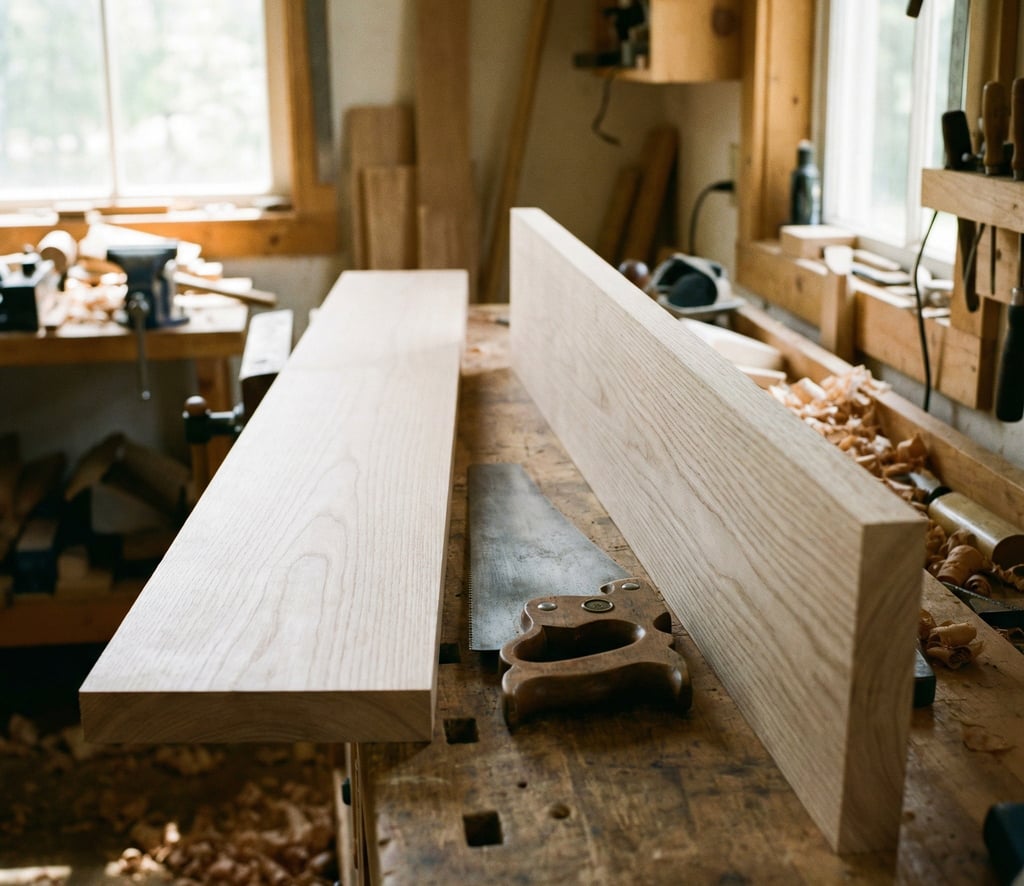
Understanding Cut Types: Rip vs Crosscut
Woodworking breaks down simply into two main cut directions: rip and crosscut. These aren’t just fancy terms; they define how your saw’s teeth engage the wood.
- Rip Cuts: Cutting with the grain, ripping fibers apart lengthwise. Rip teeth are mostly straight, designed to split the wood fibers efficiently. Skip this and try to crosscut with a rip blade, and you’ll get rough edges and tear-out. Ask me how I know.
- Crosscuts: Cutting across the grain, severing fibers cleanly. Crosscut teeth have alternating bevels that behave like little knives for a smoother finish.
Before you reach for a saw, nail down which cut you’re doing. Using the wrong tooth pattern not only makes work harder but can ruin your material.


Hand Saws: Backsaws, Backless, and Frame Saws
Hand saws come with different designs, and each has its spot.
- Backsaws have a reinforced spine keeping a thin blade straight. This feature shines in joinery, like tenons or dovetails, where precision matters. These saws have fine teeth — upwards of 16 to 32 points per inch (PPI) — to make smooth, accurate cuts. In my shop, a quality backsaw is non-negotiable for joinery.
- Backless Saws have flexible blades with no spine, suited for more general cutting where you can get away with less precision.
- Frame Saws hold a thin blade tight in a frame, allowing delicate cuts, often in cabinetmaking.
Choosing Hand Saws
- Use backsaws when your cut demands accuracy.
- For rough rip or crosscuts on framing lumber, a general-purpose handsaw does fine.
- Pay attention to tooth count (PPI): higher for fine cuts, lower to speed through rough cuts.
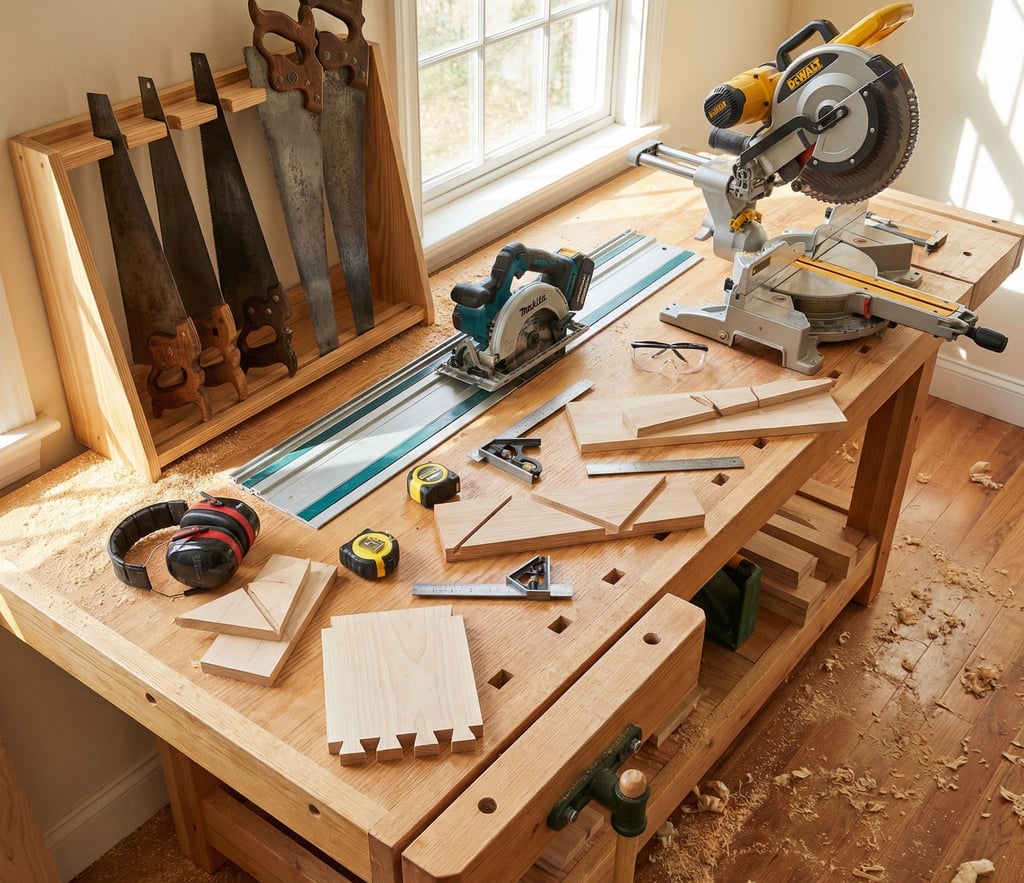
Power Saws: Circular, Table, Miter, and More
Power saws changed woodworking — but they still need to be matched properly to your task.
- Circular Saws are versatile, capable of ripping, crosscutting, and bevel cuts — especially handy on-site or for large panels. You can change blades for rip or crosscuts, which is key.
- Table Saws remain the standard for accurate ripping of sheet goods and dimensional lumber. They give you control over blade height and fence positioning to maintain straight, repeatable cuts.
- Miter Saws cut angled crosscuts and bevels with confidence, perfect for framing and trim work.
- Jigsaws and Band Saws excel at curves and irregular shapes but aren’t your first choice for clean rip or crosscuts.
Choosing Power Saws
- For ripping plywood or large sheets — table saw or track saw.
- For angled crosscuts — miter saw.
- For rough lumber cuts with versatility — circular saw.
- Always match blade type to cut: rip blades for ripping, crosscut blades for crosscuts.
How to Choose the Right Saw for Your Project
There’s no one-size-fits-all here. Consider:
- Cut direction: Along or across the grain?
- Material thickness and hardness: Denser hardwoods may need specialized blades or larger saws.
- Precision level: Joinery demands finer saws and tighter tolerances.
- Portability: Hand and circular saws for moving around, table saws need a stable workspace.
- Speed vs. control: Power saws improve throughput, but hand saws let you dial in accuracy.
Recommended Tools from Experience
- Irwin 10507858 Evo Universal Handsaw: Reliable for general-purpose rip and crosscuts.
- Makita DCS553Z Circular Saw: Solid performer for ripping lumber and crosscutting with blade changes.
- WEN CT1065 Track Saw: Great for straight, precise rip cuts on sheet materials.
- Gazelle G80127 18-Inch Handsaw: Good for detailed work with fine teeth.
Common Pitfalls to Avoid
- Using crosscut blades to rip wood — expect splintering and wasted material.
- Picking a blade too fine or coarse for your wood thickness.
- Ignoring tooth count (PPI) which defines smoothness and speed.
- Overlooking compatibility — blades and saws need to match physically and for the task.
Glossary of Key Terms
- Ripcut: Cut with the grain; teeth are mostly straight.
- Crosscut: Cut across the grain; teeth have alternating bevels.
- Points Per Inch (PPI): Teeth count per inch; higher PPI means smoother cuts.
- Backsaw: Saw with stiffened back for straight, precise cuts.
- Tenon saw: A backsaw designed specifically for making tenon joints.
FAQs
Q: What’s best for ripping plywood?
A: A table saw or track saw with a rip blade gets you clean, straight cuts without tear-out.
Q: How do ripcut and crosscut teeth differ?
A: Rip teeth are straight-topped to slice fibers along the grain; crosscut teeth have alternating bevels to sever fibers cleanly across the grain.
Q: Which saw is best for beginners?
A: A circular saw covers most bases — ripping, crosscutting, beveling — and teaches good habits with a bit of practice.
Matching your saw to the cut may sound simple, but overlooking it causes rough cuts, wasted wood, and unnecessary frustration. Choose wisely, match tooth pattern and saw to the task, and you’ll save time and material while working safer and cleaner. That’s the kind of practice that separates solid results from rookie mistakes.