
What Woodworking Power Tools Do Well
Explore how woodworking power tools boost efficiency while demanding responsible use to ensure precision, safety, and quality in your craft.
TOOLS 2 - POWER TOOLS / CUTTING / HOLDING
Sawdust BuzzBlog Editorial Team - Led by AJ “Buzz” Eichman
2/9/20264 min read
What Woodworking Power Tools Do Well
Woodworking power tools have changed the way we work wood—no question about that. But knowing what these tools actually do well, and where the limits lie, separates steady craftsmanship from costly mistakes. In my shop, power tools are about efficiency paired with responsibility. If you skip understanding that balance, you’ll pay for it later—in rework, safety issues, or wasted time.
Here’s my take on where power tools add value, which ones earn their place on your bench, and how to use them without cutting corners.
Why Power Tools Matter
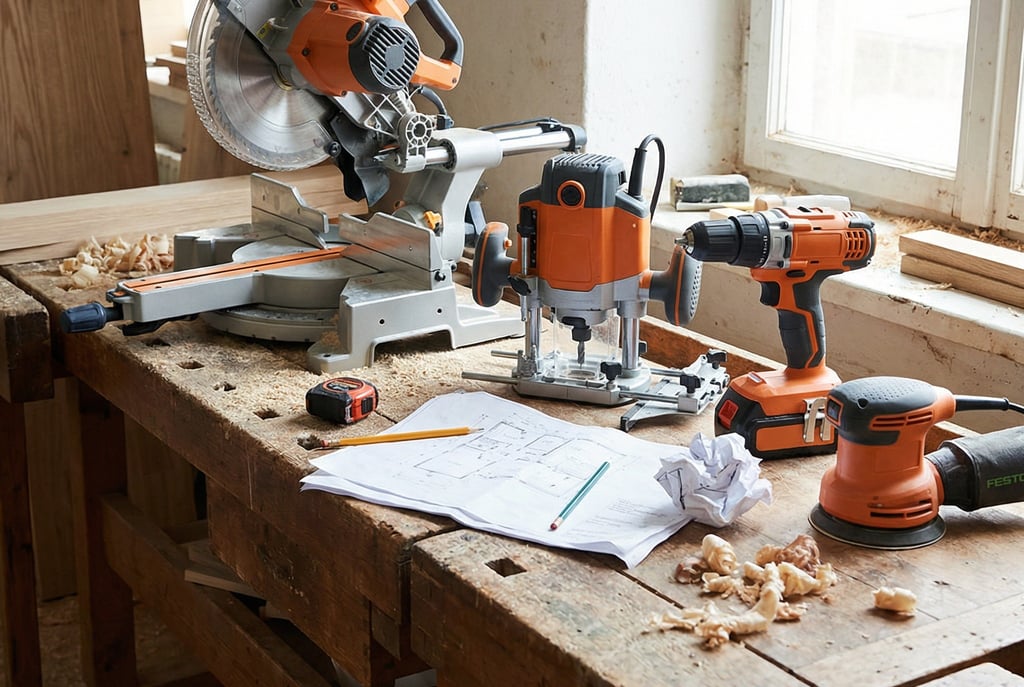
Power tools speed up common woodworking tasks like cutting, shaping, drilling, and joinery. But they’re tools, not magic. The key is understanding the purpose each serves so you don’t overreach or underuse them. Use the right tool the right way, and you’ll see productivity rise without sacrificing quality.
Essential Woodworking Power Tools and Their Strengths
Circular Saws: Straight Cuts, Fast and Portable
Circular saws are a mainstay for breaking down sheet goods and dimensional lumber. Their portability means you can work off the bench or on the job site. They excel at quick, straight cuts when set up correctly.
I’ve seen plenty of jobs go sideways because the saw wasn’t square, or the blade was dull. Sharp blades and a well-adjusted fence make the difference — skip those steps and you’re chasing crooked cuts all day.
Routers: Precision in Shaping and Joinery
Routers handle profiles, grooves, and joinery with finesse. They’re the go-to for cabinetry and furniture details. A solid router with quality bits lets you add finesse that saws can’t touch.
That said, routing is where most beginners trip up—too deep a cut or the wrong speed ruins the workpiece. Take small passes and let the tool do the work. Ask me how I know.
Drills: The Versatile Workhorse
Cordless drills are invaluable. From drilling pilot holes to driving screws, they’re the foundation of assembly. Battery technology keeps improving, but don’t rely on speed settings alone—momentum control and the right driver bit prevent stripped screws and broken parts.
Miter Saws: Clean, Accurate Angled Cuts
Miter saws make trim and framing cuts precise. Compound and sliding variations adapt to different stock widths and angles. They save hours over manual miter boxes by repeating accurate bevels and miters quickly.
You need a stable base and sharp blades to trust a miter saw’s accuracy. Dull or loose setups will sneak in errors that become obvious during installation.
Planers: Flattening and Thicknessing Lumber
Planers smooth rough stock, giving you uniform thickness and flat surfaces crucial for joinery. High-end models with helical cutterheads run quieter and produce cleaner cuts but demand regular maintenance.
Ignoring planer upkeep—dull knives or clogged dust ports—leads to tear-out and motor strain. It’s one of those steps that feel optional until you’re paying for it with wasted material.
Trusted Brands That Stand Up Over Time
In my experience, buying quality tools pays off over chasing the cheapest option. Here are a few brands that consistently deliver on durability and performance in typical woodworking shops:
- Makita: Excellent brushless motor tech and battery life. Their circular saws and planers hold up well for both hobbyists and pros.
- Bosch: Precision-oriented tools with thoughtful features. They aren’t the cheapest but last and perform reliably.
- DeWalt: User-friendly with solid professional performance. I prefer their drills and miter saws for the balance of power and control.
- Milwaukee: Powerful cordless options, especially routers, with some of the best dust collection out there. Worth considering if dust control is a priority.
- Festool and Powermatic: Premium tools for those who need top performance and are willing to invest. These tools often pay you back in consistency and less frustration.
What to Expect from 2025 Power Tools
Technology is moving steadily. Brushless motors are becoming standard—longer life, less maintenance. Improved dust collection systems help keep your shop clean and lungs safer. Ergonomics are getting attention too; tools designed to reduce fatigue after hours on the job.
Digital controls and app connectivity are trickling in, useful for fine-tuning and monitoring tool health, but they’re not essential for good craftsmanship. Don’t get caught chasing features that don’t solve problems you have.
Using Power Tools Responsibly: The Real Efficiency
Power tools speed work only if you respect what they need:
- Follow manufacturer instructions—no shortcuts there.
- Maintain blades, bits, and mechanical parts regularly. Neglect is the fastest way to dull tools and unsafe conditions.
- Use dust collection and personal protective equipment. It’s not optional if you want to work long term.
- Match the tool to the job and your skill level. Overpowered or under-skilled use leads to mistakes.
- Consider environmental impact. Energy-efficient models and durable construction reduce waste.
Skipping these basics isn’t just careless; it’s costly.
Common Pitfalls I See
- Buying unfamiliar or cheap tools without vetting leads to frustration and early replacement costs.
- Neglecting maintenance, especially on saws and planers, quickly degrades output quality.
- Rushing cuts or skipping safety gear tends to make “speed” a false economy, with repairs taking longer than the time saved.
Conclusion
Power tools have rightly earned their place in woodworking. They combine speed with precision when chosen and used thoughtfully. In my shop, that means picking reliable brands, maintaining gear, and respecting the tool’s role without shortcuts. That balanced approach delivers quality results and safety—two things you don’t want to compromise.
Use power tools to help, not complicate your craft. Take those lessons from experience and you’ll avoid mistakes that slow you down and erode your confidence.
Glossary
**Brushless Motor**: A motor design without brushes, giving longer tool life and better efficiency.
**Helical Cutterhead**: A cutterhead with spiral carbide inserts, offering smoother, quieter cuts—especially in planers.
**Miter Saw**: A saw designed for precise angled crosscuts, crucial for trim and framing.
**Orbital Sander**: A sander producing random orbital motion to prevent swirl marks on surfaces, creating smooth finishes.
If you keep these basics in mind, you’ll get more from your power tools and less hassle. There’s no substitute for steady, responsible use – the kind learned over years, not from flashy ads.
That’s the advice I trust—and the advice worth passing on.