
Why Hand Tools are Ideal for Learning
Discover why hand tools offer unmatched control, feedback, and precision essential for building lasting woodworking skills from the ground up.
TOOLS 1 - PROB SOLVER / ACCURACY /HAND TOOLSEDITOR PICKS
Sawdust BuzzBlog Editorial Team - Led by AJ “Buzz” Eichman
2/9/20264 min read
Why Hand Tools Are Ideal for Learning
When you start out in woodworking—or any hands-on craft—there’s a lot to take in. You want to build real skill, not just mimic a few steps. That’s why, in my experience, hand tools provide the best foundation for learning. They offer something power tools can’t: direct control, immediate feedback, and precision that trains your eye and muscles from the ground up.
This post breaks down why hand tools matter first when you’re learning, how they create lasting skill, and what common pitfalls to avoid.
The Control Hand Tools Give You Is Nonnegotiable
If you jump straight to power tools, you miss one essential thing: control. I’ve seen beginners struggle with this a lot. Power tools tend to push material around at high speeds. You’re mostly guiding the machine rather than controlling it.
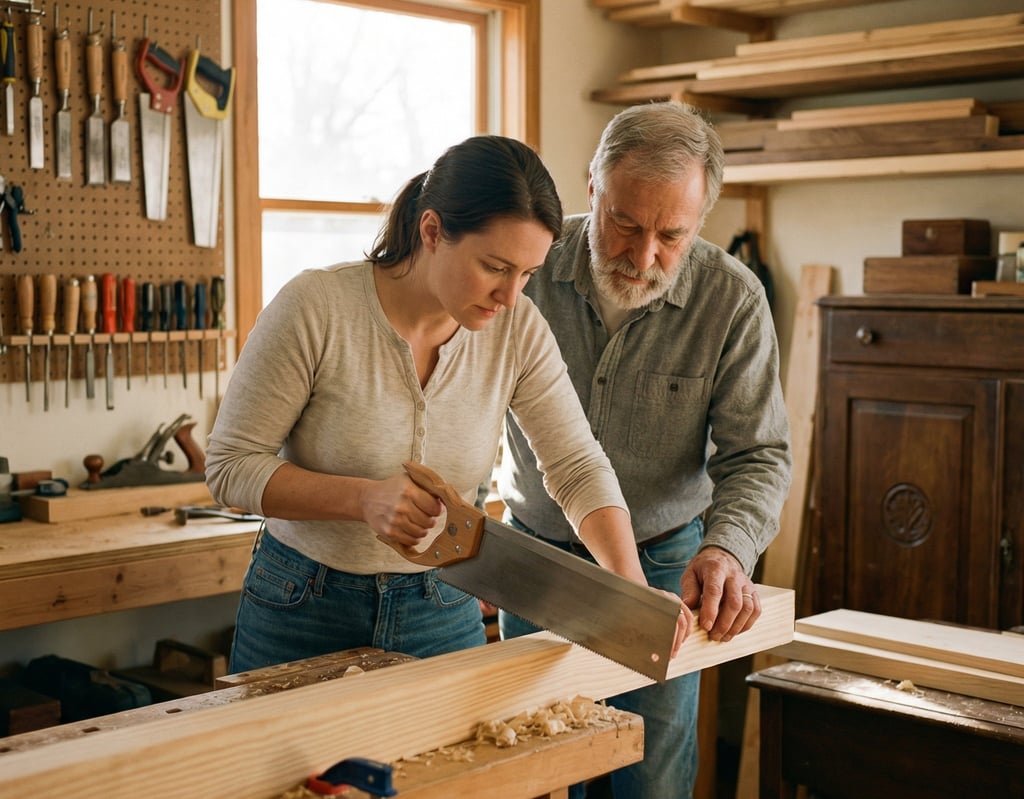
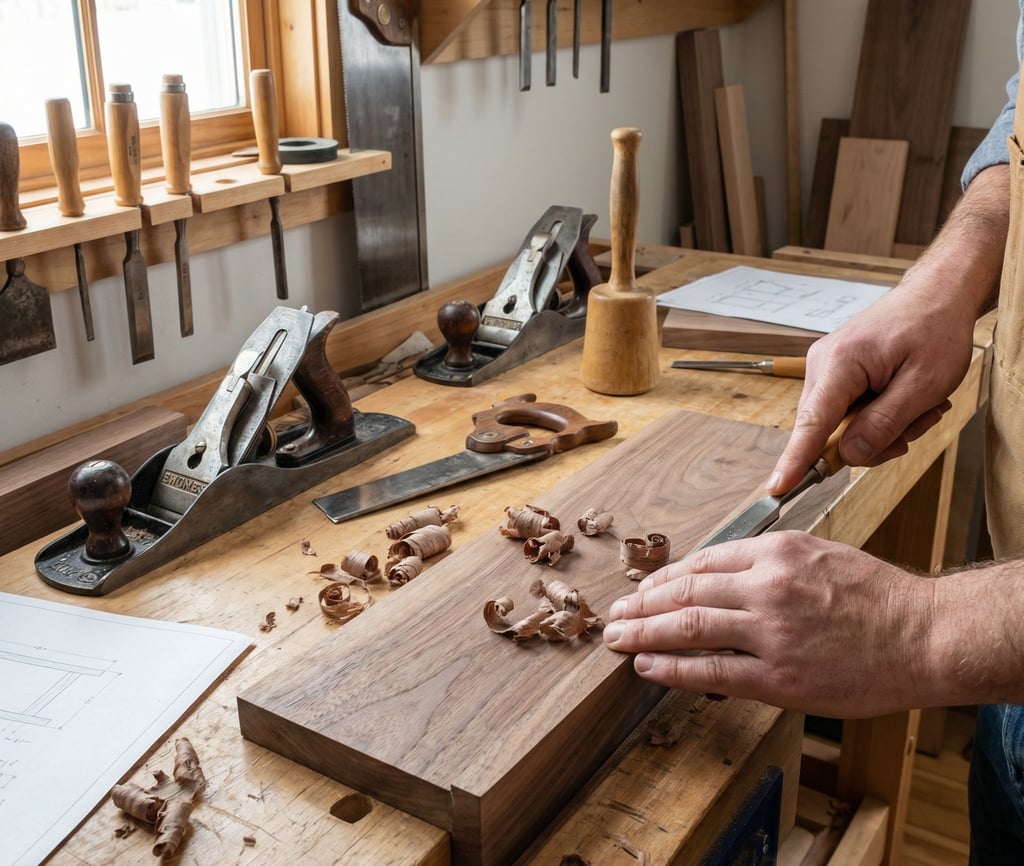
Hand tools—saws, planes, chisels—require you to move deliberately. You feel every resistance, every little change in grain direction. That feedback loop helps you develop your hand-eye coordination and steadiness. Without that, you end up guessing or relying too much on the tool, not your own skill.
Try cutting a line with a handsaw. When your stroke is off-angle or unsteady, you see it immediately. You learn to adjust pressure and angle. That kind of control is foundational. Skip it, and you’ll struggle with precision once you level up to power tools.
Feedback from the Wood Itself Is Your Teacher
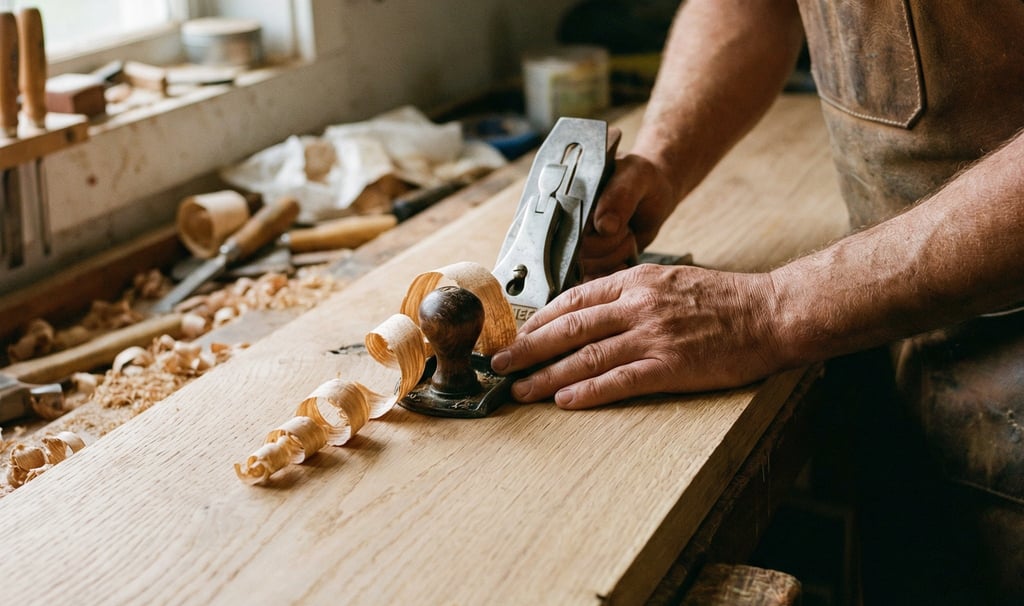
One reason hand tools survive while power tools keep evolving is the level of feedback you get. When planing or carving by hand, you sense how the wood reacts. Is the grain pulling out? Is the blade skimming smoothly or digging in?
Power tools often mask these signals. High speed and vibration bury the subtle messages you need to learn wood’s nature. I’ve seen plenty of new woodworkers frustrated by tear-out or tear-up without realizing the problem early enough; that’s a power tool masking the lesson.
Hand tools engage all your senses: touch, sound, sight. That multi-sensory feedback teaches you how to work with the material, not fight it. That understanding is worth its weight in skill currency.
Precision Comes from Muscle Memory, Built Slowly
Precision isn’t something that happens right away—it’s earned with repetition and practice. Hand tools are the perfect vehicle for this kind of learning.
Using a chisel or plane over and over hones small muscles and nerves so your hands do exactly what you want instinctively. I’ve watched woodworkers “graduate” from clumsy cuts to confident, consistent joins thanks to this kind of steady practice.
Start small. A few basic hand tools repeated daily will build skill faster than diving into dozens of tools or power options at once. The slower pace forces you to focus on accuracy rather than speed or brute force, and the results show in the quality of your work.
Safety and Practicality Make Hand Tools Welcoming for Beginners
Hand tools generally present a safer learning space, especially for kids or those uncomfortable with power tools. The slower pace and direct action mean fewer surprises and less potential for severe injury.
Beginners can start with simple tools like a handsaw, hammer, or chisel under supervision and build confidence before ever touching a table saw or router. In my experience, this reduces intimidation and makes the learning process more approachable.
Plus, hand tools don’t require complicated set-ups or electrical power. This makes them ideal for classrooms, small workshops, and home use without a lot of investment or noise.
Hand Tools Build Long-Term Craftsmanship, Not Just Quick Fixes
Skills developed through hand tools carry long into advanced woodworking. There’s a connection to your work you don’t get with power tools alone. The craft becomes more thoughtful, deliberate, and respectful of material—and this mindset pays off when you want to build heirloom-quality pieces.
Hand tools last generations if cared for properly. Power tools wear out, become obsolete, or break down. Starting with hand tools also fosters problem-solving and creativity, because you learn how to address challenges with technique rather than just brute force or speed.
FAQs
Are hand tools slow compared to power tools?
Yes, and that’s the point. Slowing down lets you understand what you’re doing instead of rushing through and making mistakes you’ll have to fix later. Ask me how I know.
What basic hand tools should I begin with?
In my shop, I recommend a handsaw, a small set of chisels, three hand planes (block, smoothing, and jack), and a couple of simple jigs like a bench hook or shooting board. These cover essential skills without overwhelming you.
Can hand tools fully replace power tools?
Depends on the work. For fine detail and joinery, hand tools often do the job better. For heavy, repetitive stock removal, power tools are practical. But learning on hand tools builds the foundation no matter what you use later.
Common Mistakes to Watch For
- Starting with expensive or multiple power tools before mastering hand tool basics.
- Letting blades and irons dull. A dull tool teaches bad habits and frustrates progress.
- Buying too many tools too soon, which scatters your focus.
- Expecting quick progress and getting discouraged when things don’t move fast. Muscle memory and feedback take time—but they’re non-negotiable.
---
Conclusion
In my experience, hand tools aren’t just nostalgic relics—they are the best teachers. They give you control, immediate feedback, and the precision training your hands and mind need. Skip the shortcuts and start here. You’ll build confidence and skill that power tools alone can’t provide. That’s a foundation worth investing in.
---
*If you want help selecting your first set of hand tools or how to sharpen and maintain them, I can guide you through that next step.*