
Wood as a Living Material
Wood is a living material that moves, ages, and reacts to its environment. Learn how moisture, grain direction, and natural behavior affect your projects—and how to work with wood so your craftsmanship lasts.
WOOD & FINISH 1 - WOOD / SOFT HARD / ENGINEEREDBASIC - JOINERY/ WOOD MOVEMENT / SANDINGEDITOR PICKS
Sawdust BuzzBlog Editorial Team Led by AJ “Buzz” Eichman
2/8/20265 min read
Wood isn’t just a lump of material stacked or carved into shape. It’s a living, breathing substance that reacts to its environment—and that reaction doesn’t stop once it's cut from the tree. Understanding wood’s behaviors isn’t a luxury; it’s necessary if you want your work to last. Over the years, I’ve learned the hard way that overlooking wood’s living nature can turn a promising project into a headache.
In this guide, I’ll walk you through what makes wood a living material, how it moves and changes, and what practical steps you need to take so that your woodwork holds steady instead of breaking down.
Wood’s Living Nature: What You Really Need to Know
Wood’s structure isn’t uniform like steel or plastic. It’s orthotropic, meaning its properties change depending on the direction you look at it: along the grain (longitudinal), from the center outward (radial), and across the growth rings (tangential). That comes from wood’s biological origin—it’s a tree that grew in layers, made up of cells designed to carry water and resist forces.
That complexity is why wood shrinks, swells, bends, and ages differently depending on where and how you use it.
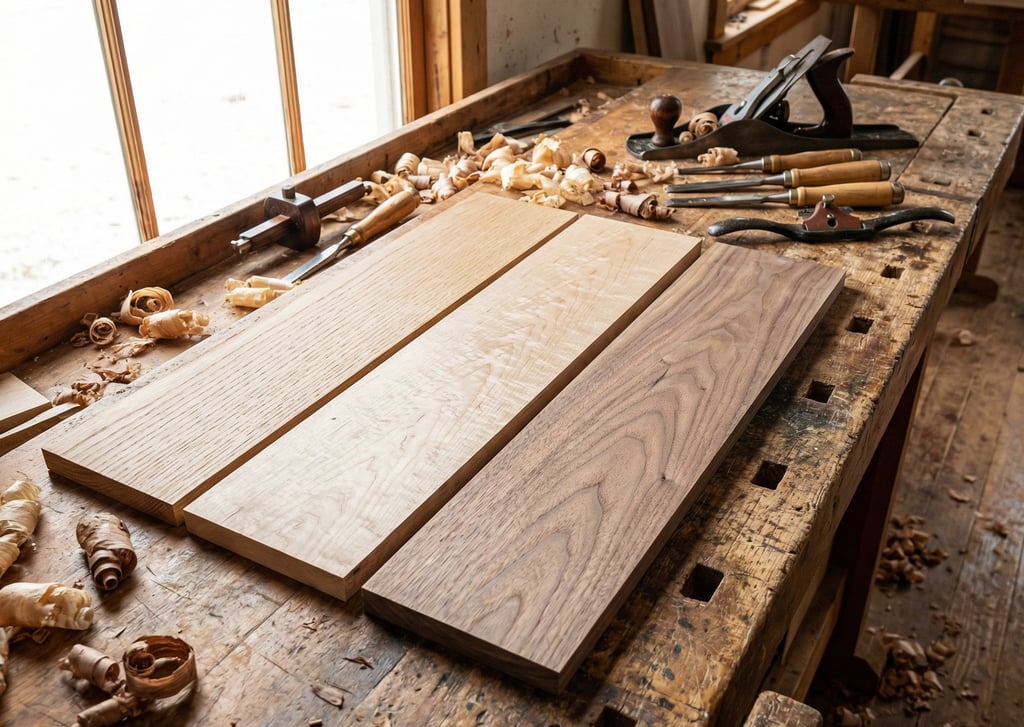
Direction Matters: Wood’s Orthotropic Structure
Here’s where most folks get tripped up: wood isn’t the same in every direction.
- Longitudinal (along the grain): Wood is at its strongest and stiffest here because cellulose fibers run parallel.
- Radial (from center outward) and tangential (along rings): Wood is weaker, and this is where it expands and contracts most when moisture changes.
This difference explains why a plain-sawn board (tangential) will cup or twist more than a quarter-sawn board (radial). I used to ignore this detail and wound up with warped shelves. Ask me how I know.
Wood’s Mechanical Behavior: Viscoelasticity
Wood isn’t just stiff or brittle—it has a bit of give. It behaves viscoelastically: it stretches and compresses under load and then partially bounces back, but if you push too hard or too long, it changes shape for good.
This explains why wood can handle impacts better than some materials, but also why joints and fasteners need to respect this behavior. I’ve learned that forcing screws too close to edges or failing to account for this can cause splits or joint failures down the road.
Moisture: The Invisible Factor Controlling Wood’s Life
Moisture Content (MC) and Wood Movement
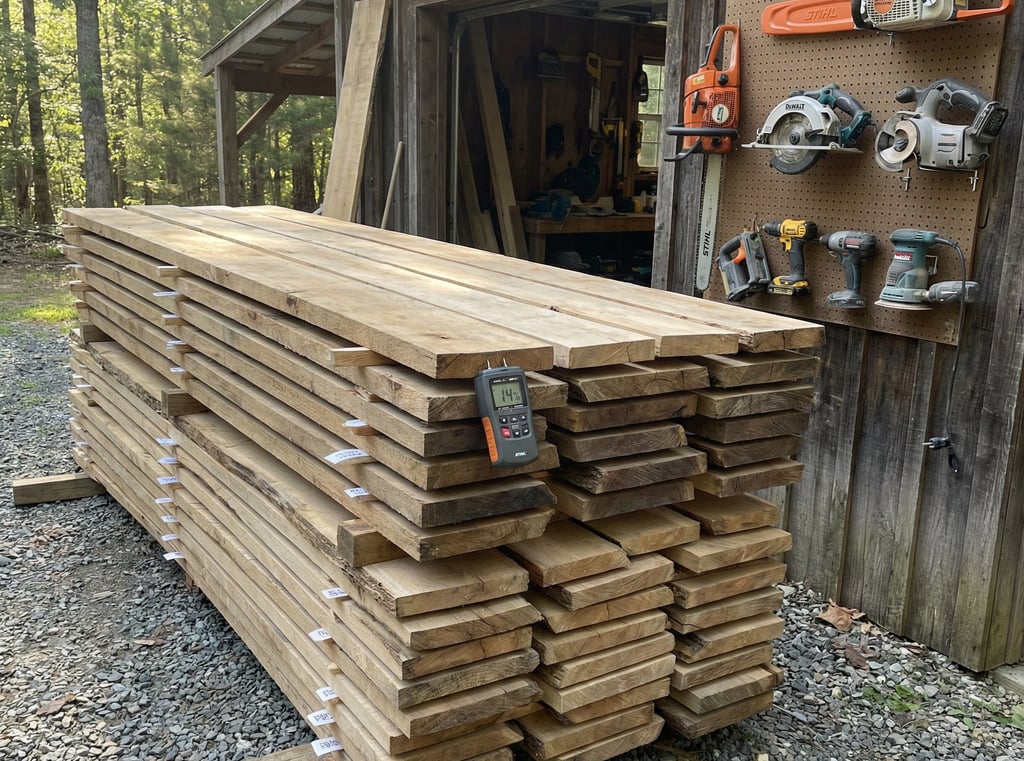
Wood’s moisture content—the percentage of water in its structure—rules its strength and stability. Green wood can have over 30% moisture; air-dried wood usually sits around 12-13%. As wood gains or loses moisture, it swells or shrinks—but it doesn’t do this evenly:
- Tangential shrinkage is roughly twice radial shrinkage.
- Longitudinal shrinkage is minimal.
If you skip proper acclimation or ignore these numbers, you’re setting yourself up for cracking, warping, or joint failures later. In my shop, acclimating wood to the workshop environment before working has saved countless pieces.
What Happens if You Don’t Account for Moisture Movement?
If you build a panel that restricts wood’s natural movement, that panel will crack, warp, or buckle eventually. No fancy glue or finish solves this. I once tried to cheat on panel design—ended up disassembling and redoing the whole thing. There’s a reason I don’t do it that way anymore.
Wood Ages and Changes Over Time
Even after cutting, wood keeps changing—color shifts and textures evolve owing to exposure to air and light. This chemical response is called patina.
- Cherry, for example, darkens nicely with light exposure.
- Walnut and mahogany tend to lighten and soften in tone.
You want to think about this upfront. Your finish choice can either highlight or mask these natural changes. Expecting wood to look exactly like it did on day one is a dialogue about control you’ll lose every time.
Picking the Right Wood for Your Work
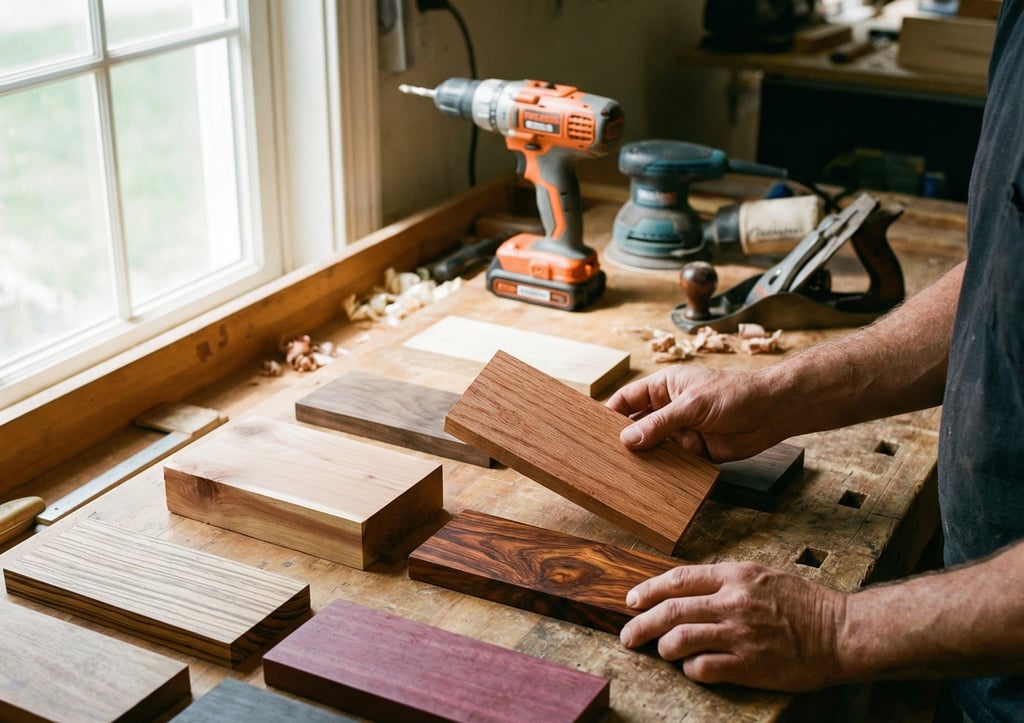
Every species has its personality. Hardwoods tend to handle wear better but often come with more complex movement. Softwoods are easier to work but less durable depending on the project.
- Cedar resists decay and stays stable outdoors.
- Red oak shrinks quite a bit and demands attention during drying.
- Exotic woods might be beautiful but can throw curveballs with moisture and finishing.
Choosing wisely here saves headaches—and room for creativity.
Common Pitfalls to Watch For
- Skipping Wood Acclimation: Fresh wood needs time to adjust, especially if it’s traveled far.
- Ignoring Directional Movement: Build joints and components that allow wood to do what it wants to do.
- Overlooking Finish Effects: Understand how finishes affect color and moisture exchange.
- Species Missteps: Don’t guess on species suitability—look it up or ask a pro.
- Density and Strength Ignorance: Heavy wood usually means strong wood, but it’s not always simple—know your project’s needs.
Quick Glossary
- Orthotropic: Properties differ along longitudinal, radial, and tangential directions.
- Viscoelasticity: Wood’s mix of elastic and permanent deformation under stress.
- Moisture Content (MC): Water percentage in wood impacting workability and stability.
- Wood Movement: Swelling/shrinking from moisture changes, variable by grain direction.
- Patina: Natural aging changes in wood’s surface color/texture.
- Extractives: Chemical compounds responsible for wood’s color and aroma.
FAQs
Why does wood change color over time?
Wood reacts chemically to oxygen and UV light, which alters the extractives in the surface and creates a unique aging pattern.
How does moisture affect wood strength?
Wet wood is weaker because water disrupts the cell structure. Air-dried wood around 12-13% MC has its best balance of strength and stability.
What is wood movement and why does it matter?
Wood moves as it gains or loses moisture, swelling or shrinking unevenly. If you don’t plan for it in your design, you’ll face cracks or warped joinery.
How do species respond differently to environmental changes?
Species vary in how much they shrink, how they react to light, and their decay resistance. Cherry darkens; walnut lightens. Cedar resists rot. Each calls for different handling.
Final Thoughts
Wood isn’t a lump of inert material—it’s a living partner that breathes, moves, ages, and reacts. If you treat it like a static block, you’ll run into problems. But if you earnestly respect its complexities and work with its nature, your projects gain durability and character that only come from a deep understanding of the wood itself.
Experience teaches that mastery isn’t about shortcuts—it’s about anticipating what wood will do, not just what you want it to do. Approach your craft with that mindset, and your work will stand the test of time.
Keep this knowledge close. It’s built on mistakes, fixes, and years of making wood last.